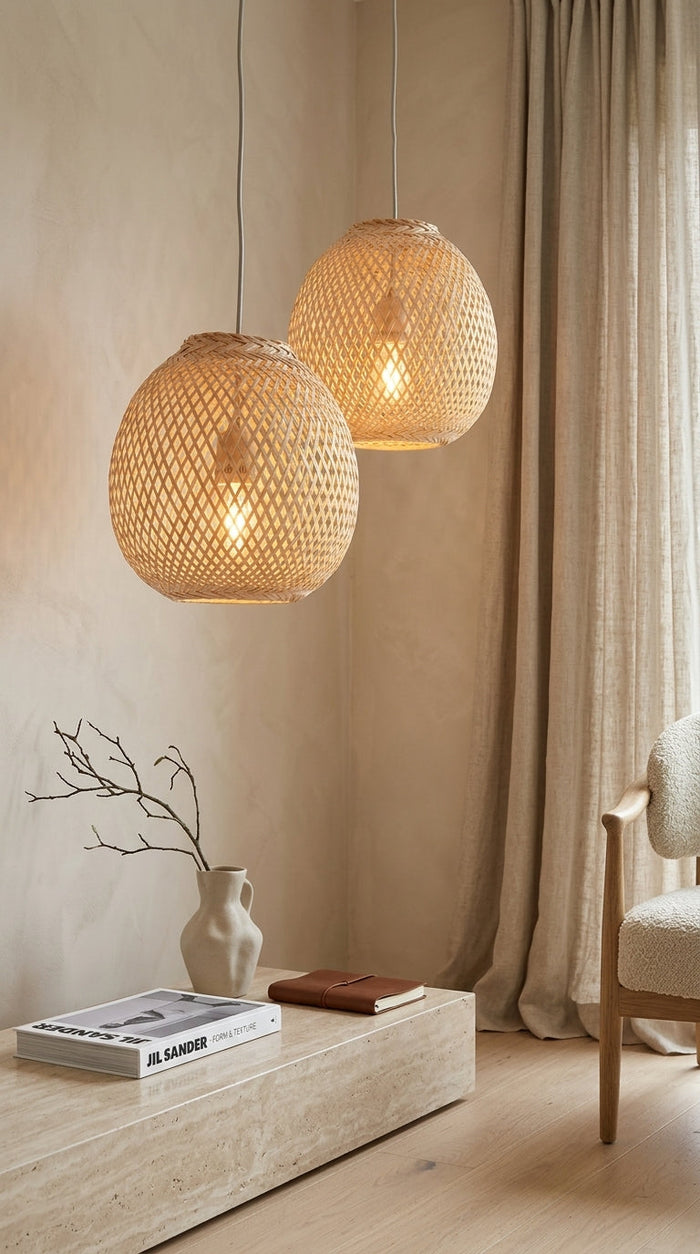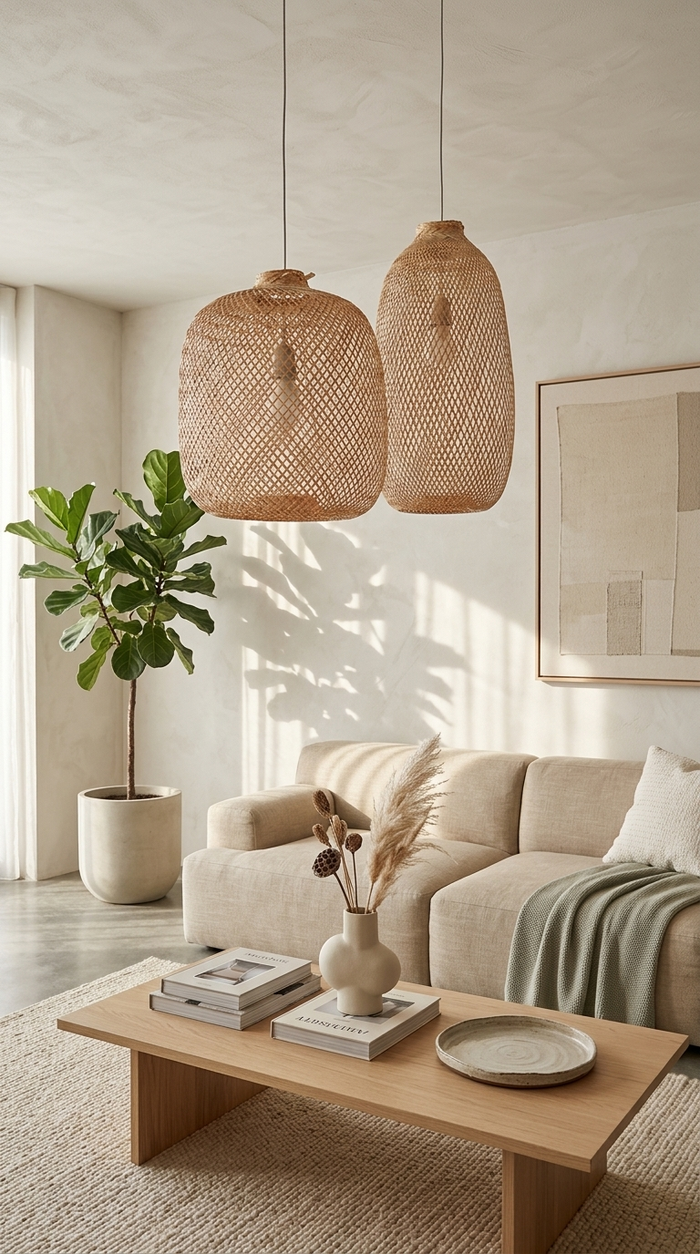
Lámparas colgantes de ratán: cómo elegirlas, combinarlas y colgarlas (2026)
Una guía práctica para comprar lámparas colgantes de ratán: cómo elegir el tamaño adecuado para tu isla de cocina, mesa o habitación, a qué altura colgarlas, ratá...

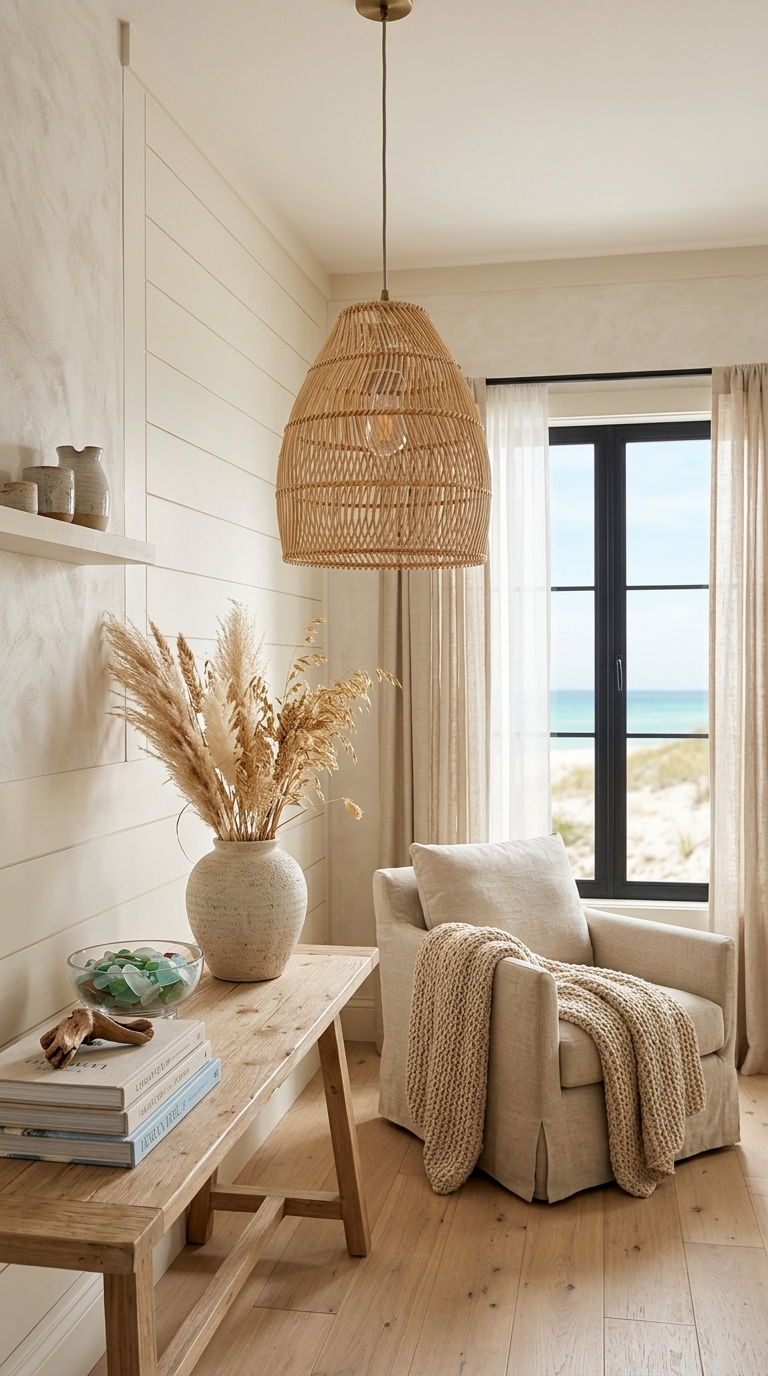
Una lámpara colgante de ratán aporta calidez a una habitación más que casi cualquier otro cambio individual que puedas hacer. Añade textura, una luz tenue y esa sensación acogedora y artesanal con una sola pieza colgante.
Lo que más se lamenta no es el color ni el tejido, sino el tamaño. Si es demasiado pequeña, la lámpara colgante se pierde visualmente. Si es demasiado grande, se come la habitación.
Esta guía resuelve ese problema. Empezamos por las decisiones prácticas antes que por las estéticas, porque son las que la gente suele tomar mal.
Una nota rápida sobre el material. El ratán es una enredadera sólida y flexible, no bambú, que es una hierba hueca. Tienen un aspecto y un comportamiento distintos, y más adelante los comparamos en detalle. Por ahora, basta con saber que el ratán es el material que se curva para formar esas cúpulas redondeadas y tejidas. También verás que estas pantallas tejidas se llaman lámparas colgantes de mimbre, ya que «mimbre» solo describe el tejido, no un material diferente.
Este es el recorrido: cómo elegir el tamaño, a qué altura colgarla, dónde funciona mejor en cada habitación y la respuesta sincera sobre el uso en exteriores. Por el camino, nuestras lámparas colgantes de ratán hechas a mano sirven de ejemplos reales, no solo teóricos.
Cómo elegir el tamaño adecuado
El tamaño es lo que más inquietud genera, pero no debería. Solo hay tres situaciones, y cada una tiene una fórmula sencilla. Ajusta la fórmula a lo que iluminará la lámpara colgante y no volverás a tener que adivinar.
| Qué quieres iluminar | La fórmula | Ejemplo |
|---|---|---|
| Una habitación entera (dormitorio, entrada, sala de estar) | Suma el largo y el ancho de la habitación en pies. Esa cifra, expresada en pulgadas, es un buen diámetro para la lámpara colgante. | Para una habitación de 12 por 14 pies, se recomienda una lámpara colgante de unos 26 pulgadas. |
| Una isla de cocina | Elige una lámpara colgante de aproximadamente un tercio a la mitad del ancho de la isla. Para una fila, coloca de 2 a 3 lámparas colgantes a intervalos iguales y deja unas 6 pulgadas desde cada extremo hasta el centro de la primera. | Para una isla de 40 pulgadas de ancho, elige una sola lámpara colgante de unas 13 a 20 pulgadas o un par de lámparas más pequeñas separadas entre sí. |
| Una mesa de comedor | Elige una lámpara colgante, o un conjunto cuya anchura total equivalga a aproximadamente la mitad o dos tercios del ancho de la mesa. | Para una mesa de 40 pulgadas de ancho, elige una pantalla de unos 20 a 26 pulgadas. |
La regla de la suma de la habitación se aplica a las lámparas colgantes que iluminan todo un espacio. Las reglas para islas y mesas se aplican a la iluminación de tareas sobre una superficie concreta. Esa diferencia es lo que más suele pasar por alto la gente.
Nuestras lámparas colgantes vienen en tamaños reales que se ajustan a tus necesidades. CHA NI TA se vende en medidas claras en pulgadas, de 16 a 20 pulgadas, para que puedas elegir el tamaño adecuado para tu superficie sin convertir nada. Si prefieres pensar en centímetros, SANGTHONG mide de 36 a 39 cm.

Compra la lámpara colgante de ratán CHA NI TA
Mide primero la superficie y luego elige el tamaño. En ese orden, siempre.
A qué altura colgarla
Sobre una encimera o mesa, procura que haya entre 30 y 36 pulgadas desde la parte inferior de la pantalla hasta la superficie. Ese rango presupone un techo estándar de 8 pies.
El razonamiento importa más que la cifra porque te permite adaptarla. La pantalla debe quedar lo bastante baja para crear un círculo de luz cálida y un ambiente íntimo, pero lo bastante alta para no bloquear la vista al otro lado de la mesa. Si la cuelgas demasiado alta, tendrás deslumbramiento y un aspecto frío y suspendido. Si queda demasiado baja, tapará las caras.
En techos más altos, añade unos 3 pulgadas por cada pie por encima de los 8 pies. Un techo de 9 pies queda a unos 33 a 39 pulgadas; uno de 10 pies, a unos 36 a 42 pulgadas. En un pasillo o una zona abierta donde la lámpara no cuelga sobre una superficie, deja al menos 7 pies entre el suelo y el borde inferior para que nadie tenga que agacharse.
La forma más rápida de comprobarlo es sentarte donde se sienta la gente. Deberías poder ver con claridad por debajo de la pantalla a la persona que tienes enfrente. Empieza con 32 pulgadas y luego ajusta a ojo.
¿Una lámpara colgante o un grupo?
Una sola lámpara colgante grande es la opción más sencilla y, a menudo, la adecuada. Funciona sobre una mesa pequeña, en un rincón o como pieza protagonista cuando quieres que algo atraiga la mirada. Menos cosas que alinear y menos que pensar.
Una fila o un grupo queda bien sobre islas largas y mesas grandes, donde una sola lámpara deja los extremos a oscuras. Unas pocas reglas ayudan a que el conjunto parezca intencional. Las cantidades impares suelen verse más naturales, así que en una fila larga queda mejor un trío que una pareja. Mantén la misma separación entre cada lámpara y centra la fila sobre la superficie, no en la habitación. Combinar dos tamaños del mismo diseño aporta profundidad sin desentonar.
PUNSA está disponible en dos tamaños, lo que facilita crear una pareja o un trío coordinados que siguen pareciendo parte de la misma familia.

Compra la lámpara colgante de ratán PUNSA
Ideal para agrupar: islas largas y mesas anchas. Evítala sobre superficies de menos de unos cuatro pies, donde una sola lámpara colgante queda mejor.
Elige una forma que vaya con tu estilo
El ratán no tiene un único aspecto. La silueta y el entramado determinan todo el ambiente, así que vale la pena elegir con criterio, no a ciegas.
Una cúpula o campana redondeada clásica transmite calidez, atemporalidad y un aire costero bohemio. Combina bien con casi cualquier habitación y nunca pasa de moda. Una forma escultórica, como una luna o una silueta de farol, se convierte en un punto focal moderno que llama la atención en cuanto alguien entra. El entramado también importa. Un tejido apretado proyecta una luz suave y uniforme, mientras que uno abierto crea sombras moteadas y dramáticas en el techo. El ratán negro aporta un toque moderno y gráfico sobre paredes claras, con un aspecto más arquitectónico que acogedor.
La forma de luna de KAN es nuestra opción escultórica: una silueta curva que funciona como pieza llamativa en una habitación serena. Para un espacio más íntimo y moderno, la BLACK CHA YA NAN aporta la misma artesanía con un estilo más oscuro y gráfico.

Compra la lámpara colgante de ratán KAN (forma de luna)
Elige la silueta según el ambiente que quieras crear, no solo según la habitación donde irá.
Sobre una isla de cocina
La isla es el lugar más popular para una lámpara colgante de ratán, y con razón. Ofrece una luz de trabajo cálida y con textura, sin la frialdad plana de los focos empotrados en el techo. Es el tipo de lámpara bajo la que la gente se reúne.
Aplica la fórmula para islas de la sección sobre tamaños. Elige una lámpara colgante individual de aproximadamente un tercio a la mitad del ancho de la isla, o coloca dos o tres en fila, espaciadas uniformemente, con el centro de la primera a unas 6 pulgadas de cada extremo. Un consejo práctico para cocinar: en este espacio, un tejido más cerrado reduce el resplandor de la bombilla al descubierto mientras trabajas en la encimera.
La CHA YA NAN queda perfecta como pieza central sobre una isla: su forma clásica abovedada tiene suficiente presencia para destacar por sí sola.

Compra la lámpara colgante de ratán CHA YA NAN
Para la mayoría de las islas, elige una gran lámpara abovedada o un par de lámparas separadas entre sí, a una altura de entre 30 y 36 pulgadas sobre la encimera.
Sobre la mesa del comedor
Una lámpara colgante cálida convierte la mesa en el corazón de la habitación. Es aquí donde una pantalla de ratán demuestra su valor, suavizando la luz para que la comida y los rostros se vean bien, sin quedar descoloridos.
Centra la lámpara colgante sobre la mesa, no en el centro de la habitación, y cuélgala a una altura de entre 30 y 36 pulgadas sobre la superficie. Para elegir el tamaño, usa la regla de entre la mitad y dos tercios del ancho de la mesa: para una mesa de 40 pulgadas, elige una pantalla de entre 20 y 26 pulgadas. La pantalla tejida hace algo que una bombilla al descubierto no puede hacer: dispersa sobre la mesa un resplandor suave y con motivos, cálido y un poquito mágico.
SANGSAN es una opción encantadora para el comedor: una pantalla de tejido suave que favorece a toda la mesa.

Compra la pantalla de lámpara colgante de ratán SANGSAN
Una lámpara colgante centrada, una bombilla cálida y colgada a poca altura. Esa es toda la fórmula para una mesa en la que apetece quedarse.
Rincones acogedores: dormitorios, rincones de lectura y pasillos
Además de la cocina y la mesa del comedor, hay rincones más discretos donde una lámpara colgante pequeña de ratán aporta mucha calidez por poco dinero.
En un dormitorio, una lámpara colgante a cada lado de la cama libera las mesitas de noche y enmarca el cabecero. También funciona una lámpara colgante en el centro para lograr una luz ambiental suave, y aquí un regulador de intensidad vale más que en cualquier otro lugar. En un rincón de lectura queda genial una lámpara colgante baja que concentre una luz cálida justo donde te sientas. En una entrada o un pasillo, una pequeña lámpara colgante de ratán da una cálida primera impresión; procura que la parte inferior quede a unos 7 pies de altura para que nadie se golpee al pasar.
NATRALA, una mezcla de bambú y ratán, es nuestra opción económica para estos espacios pequeños: una forma sencilla de probar el estilo sin gastar mucho.

Compra la pantalla de lámpara colgante de bambú y ratán NATRALA
Ideal para espacios donde quieres calidez y textura sin gastar una fortuna.
En un porche cubierto o un patio: la respuesta sincera
Sí, puedes colgar una lámpara colgante de ratán en el exterior, pero solo en el lugar adecuado; este es el detalle que la mayoría de los vendedores pasa por alto.
El ratán natural no está necesariamente clasificado para uso en exteriores. Puede absorber humedad, deformarse o decolorarse con el tiempo en ambientes húmedos. Por eso, debe colocarse únicamente bajo un techo de porche realmente cubierto y seco, protegido de la lluvia y de las salpicaduras que arrastra el viento. Tener un techo encima no siempre basta si el viento hace entrar la humedad de lado.
Ahora, hablemos con franqueza de la parte eléctrica. Antes de colgar nada en el exterior, comprueba en la ficha del producto dónde debe instalarse esa lámpara y encarga la instalación de cualquier accesorio exterior a un electricista cualificado.
Bajo techo y en un lugar seco, una lámpara colgante de ratán es una luz preciosa para el porche. A la intemperie, es la lámpara equivocada en el lugar equivocado. Para saber cómo hacerlo bien en exteriores, consulta nuestras ideas de iluminación exterior con lámparas colgantes de ratán.
Ratán o bambú: ¿cuál elegir?
Casi todos los compradores se hacen esta pregunta, y pocas guías la responden con claridad. En pocas palabras, la diferencia está en la forma.
El ratán es una enredadera sólida y flexible. Su núcleo sólido y sus fibras largas permiten doblarlo y tejerlo en curvas y formas abovedadas sin que se agriete, por eso es ideal para crear esas pantallas redondeadas y orgánicas que proyectan sombras moteadas y suaves. El bambú es una hierba leñosa, hueca y rígida. Es más recto y segmentado, por lo que se presta a un aspecto lineal y estructurado, y tolera algo más de humedad.
Ninguno es mejor. Elige ratán para conseguir curvas orgánicas y una calidez bohemia, y bambú para un estilo más geométrico y estructurado. Y no siempre tienes que elegir uno u otro. Algunas pantallas combinan ambos, con las curvas del ratán y las líneas limpias del bambú.
BAI FERN es justo ese tipo de mezcla: ratán y bambú tejidos juntos en una sola pantalla.

Compra la pantalla para lámpara colgante de ratán y bambú BAI FERN
Buenas noticias sobre la instalación. Se instala igual de cualquier manera, así que nuestra guía para instalar lámparas colgantes de bambú también sirve para el ratán. Ratán para las curvas, bambú para las líneas y una mezcla para ambas cosas.
La luz que proyecta: bombillas y sombras
La bombilla que elijas lo cambia todo en el aspecto de una pantalla tejida cuando está encendida. Esta es una mejora económica que marca una gran diferencia.
Usa una bombilla de luz blanca cálida, de unos 2700 K. La luz blanca fría elimina el efecto acogedor y hace que una pantalla preciosa parezca clínica. Con un tejido abierto, la bombilla se ve en parte a través de los huecos, así que elige una que te guste ver, como una LED mate suave para una luz sin deslumbramientos o una de estilo vintage si quieres sombras más marcadas. Ese tejido abierto es lo que proyecta esas preciosas sombras moteadas en el techo y las paredes.
Un regulador de intensidad es el complemento más útil: permite ajustar la luz de la habitación, desde brillante para trabajar hasta tenue como la de una vela.
La BLACK CHA YA NAN luce este efecto a la perfección: su tejido oscuro realza cada sombra que proyecta.

Compra la pantalla de lámpara colgante de ratán BLACK CHA YA NAN
Luz blanca cálida de 2700 K con regulador de intensidad. Si aciertas con esas dos cosas, cualquier pantalla de ratán dará una luz cálida y acogedora.
¿El ratán amarillea o se deteriora con el tiempo?
Esta es la respuesta sincera a la preocupación que acompaña a la mayoría de las compras de fibras naturales. El ratán auténtico sí cambia de color, pero no como temes.
El ratán nuevo tiene un tono tostado claro y suave. Con los años, adquiere un tono más cálido e intenso, y la mayoría acaba apreciando esa pátina. Es un envejecimiento con carácter, no un amarilleamiento ni un deterioro. Quienes se preocupaban por esto al principio casi siempre acaban prefiriendo el tono envejecido al original.
Puedes ralentizar el proceso y mantener un tono uniforme si evitas que la lámpara reciba la luz solar directa e intensa y la limpias suavemente de vez en cuando, o si le aplicas un poco de aceite mineral o de linaza. El ratán artesanal es realmente duradero, siempre que no lo empapes.
Envejece como la madera, no como el plástico.
Instalación: lo básico
Hay dos maneras de colgar una lámpara de ratán, y ninguna es tan difícil como parece cuando estás sobre la escalera.
La instalación fija da un aspecto integrado. Sustituye una lámpara de techo existente, así que debe instalarla un electricista cualificado.
Una lámpara enchufable o con cable colgante es la opción ideal para quienes alquilan: solo necesitas un cable y un gancho de techo, sin instalación eléctrica fija. Las pantallas de ratán son ligeras, así que el peso rara vez es un problema. Lo importante es el soporte.
Esta es una historia aleccionadora. Alguien que estaba colgando una lámpara sin cables agrupó el cable con cinta de embalaje barata en lugar de usar los accesorios adecuados. Aguantó toda la tarde, pero a las 6 de la mañana cayó al suelo porque la cinta se había ido despegando poco a poco. Nunca improvises el sistema de sujeción. Usa el soporte, el gancho o las tiras resistentes adecuados, con una capacidad muy superior al peso de la lámpara.
Para obtener más información sobre la instalación, consulta nuestra guía de instalación paso a paso. El proceso es el mismo para el ratán. Las conexiones eléctricas deben realizarlas electricistas cualificados.
En resumen
Sigue el orden correcto y lo demás será fácil. Primero, mide la superficie. Elige el tamaño de la lámpara según las dimensiones de la habitación, la isla o la mesa: una lámpara sobre una superficie pequeña y una fila de un número impar de lámparas sobre una superficie larga. Cuélgala a una altura de entre 30 y 36 pulgadas sobre la encimera o la mesa y, para terminar, usa una bombilla cálida de 2700 K con regulador de intensidad. Si va a estar en el exterior, colócala en un lugar cubierto y seco.
Hazlo así y una lámpara colgante de ratán será la forma más fácil de darle un gran cambio a la habitación: su textura artesanal y su luz cálida hacen que el espacio parezca terminado. Explora nuestras lámparas colgantes de ratán hechas a mano para encontrar el tamaño y la forma adecuados para tu espacio.
Preguntas frecuentes sobre lámparas colgantes de ratán
¿Qué tamaño de lámpara colgante de ratán necesito para una isla de cocina?
Elige una lámpara colgante de entre un tercio y la mitad del ancho de la isla. Si colocas varias en fila, distribuye de 2 a 3 lámparas de manera uniforme y deja unos 6 pulgadas desde cada extremo hasta el centro de la primera. Una isla estándar de 6 a 8 pies suele quedar mejor con dos o tres, ya que los números impares suelen verse bien.
¿A qué altura debe colgar una lámpara de ratán sobre una mesa?
Cuélgala a 30-36 pulgadas sobre la superficie de la mesa si el techo mide 8 pies, tomando la medida desde la parte inferior de la pantalla. Añade unas 3 pulgadas por cada pie de altura del techo por encima de los 8 pies. Para comprobarlo rápidamente, siéntate y asegúrate de que puedas ver con claridad por debajo de la pantalla a la persona que tienes enfrente.
¿Se pueden usar lámparas colgantes de ratán en exteriores?
Solo en un lugar realmente cubierto y seco, como el techo de un porche protegido de la lluvia. El ratán natural no está necesariamente preparado para exteriores y puede absorber humedad cuando el aire es húmedo. Consulta la descripción del producto y pide a un electricista cualificado que instale cualquier lámpara exterior.
¿Cuál es la diferencia entre las lámparas colgantes de ratán y las de bambú?
El ratán es una enredadera sólida y flexible que se dobla para formar cúpulas curvas y trenzadas, y proyecta sombras suaves y moteadas. El bambú es una hierba hueca y rígida, adecuada para formas más rectas y estructuradas, y tolera un poco mejor la humedad. Elige ratán para aportar calidez orgánica y bohemia, y bambú para un aspecto más depurado y geométrico.
¿Las lámparas colgantes de ratán se amarillean con el tiempo?
El ratán auténtico se oscurece y adquiere un tono más cálido e intenso con el paso del tiempo, algo que suele gustar. No se vuelve quebradizo ni opaco como los materiales sintéticos baratos. Para mantener un color uniforme, evita que la lámpara reciba luz solar directa e intensa y límpiala de vez en cuando con un paño suave o aplica un poco de aceite mineral o de linaza.
¿Qué bombilla debo usar en una lámpara colgante de ratán?
Usa una bombilla LED de luz blanca cálida, de unos 2700 K, idealmente con regulador de intensidad. Como el tejido abierto deja ver la bombilla por los huecos, elige una bombilla mate o de estilo vintage para que quede bien cuando esté encendida.
¿Debería usar una lámpara colgante o varias?
Usa una lámpara colgante sobre una mesa pequeña o en un rincón, o como pieza protagonista. Elige una fila o un conjunto para islas largas y mesas anchas, donde una sola lámpara dejaría los extremos a oscuras. Si las agrupas, los números impares, como tres, suelen verse más naturales si se distribuyen uniformemente.
¿Cuánto cuestan las lámparas colgantes de ratán?
Los precios varían según el tamaño, el tejido y el diseño; en la página de cada producto se muestra el precio actual. Las piezas más pequeñas son una opción económica para probar el estilo antes de decidirte.