What Is Raffia? How It Differs From Straw and Rattan
What raffia is, where it comes from, how natural, paper and synthetic raffia differ, and how raffia compares with straw and rattan.

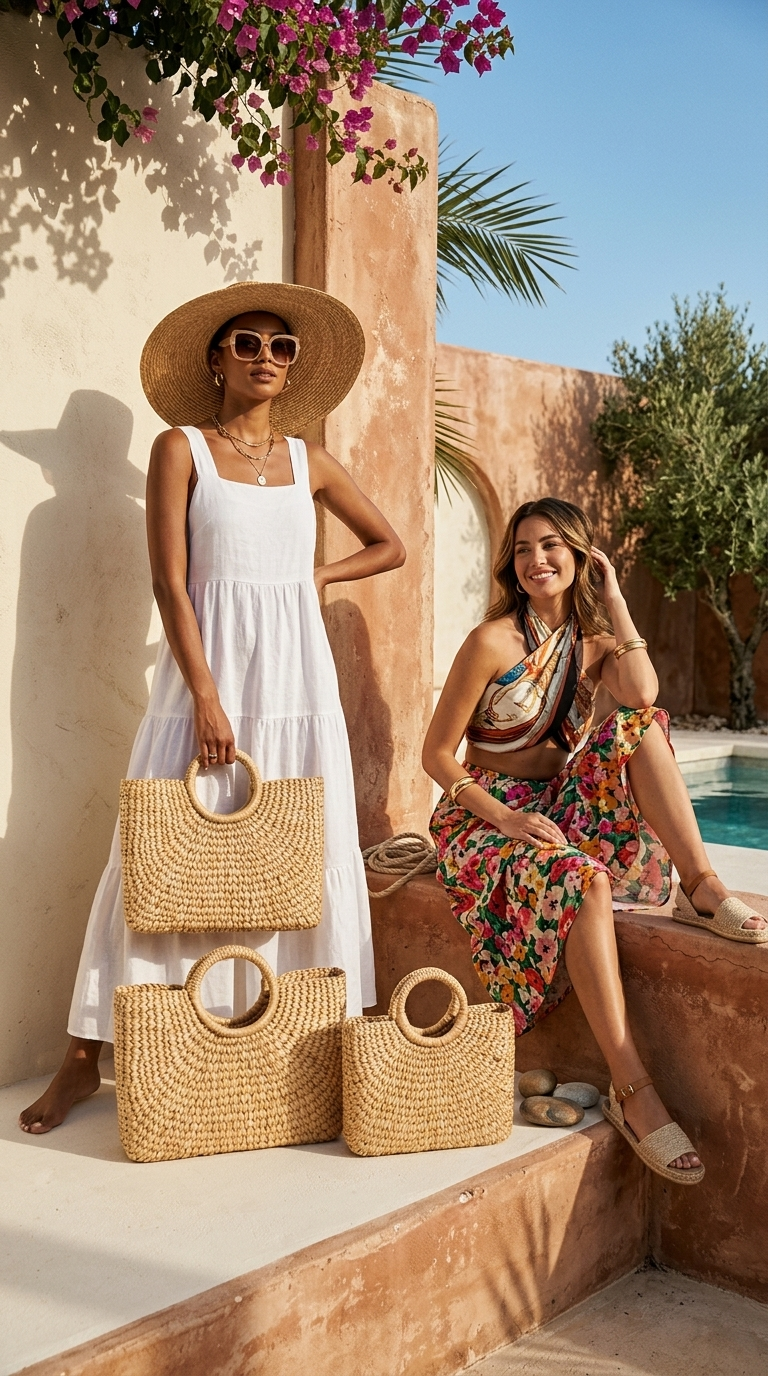
Raffia is a natural fibre stripped from the leaves of raffia palms, a group of palms that grow mostly in tropical Africa and especially Madagascar. It is woven into hats, bags, mats and baskets, and twisted into twine. The confusing part is the label. Shops use the same word for paper and synthetic imitations, and they also call raffia, along with plenty of other fibres, "straw".
So a bag sold as raffia, straw or natural fibre could be palm fibre, paper, plastic or a different plant altogether. Below, we sort out three words that are easy to mix up (raffia, straw and rattan) one by one, then give a short checklist for reading a product listing so you can tell what a woven piece is actually made of.
Where raffia comes from
Raffia palms belong to the genus Raphia. According to Wikipedia's entry on the raffia palm, the genus has about 20 species, native to tropical Africa and especially Madagascar, with one species also found in Central and South America.
The fibre is not the whole leaf. It is the thin membrane on the underside of the leaf fronds, peeled away in long, narrow strips. The strips can be rolled together for strength before they are dried, then dyed and woven, or made into twine and rope.
Hold on to that detail, because it is what separates raffia from straw and rattan. Raffia is a leaf fibre, stripped into strands. It is not a stalk, and it is not a stem.
Natural, paper and synthetic raffia
Shop for raffia and you will meet three different materials under one name:
- Natural raffia is the palm fibre described above.
- Paper raffia is manufactured from wood pulp cellulose. It has a consistent, even texture and comes in a wide range of colours, which is why it is popular for crochet, gift wrapping and other crafts.
- Synthetic raffia is manufactured too, from materials such as rayon, nylon or polypropylene. It shares the even texture of paper raffia, and its most noticeable feature is a shiny finish.
This is the distinction that changes what you are buying. A bag woven from palm fibre and a bag woven from polypropylene can both be sold as raffia, so the word on its own tells you less than it seems to.
On a label, look for the qualifier. Natural raffia, or a mention of the raffia palm, points to the plant. Paper raffia means paper. Synthetic raffia, or a named plastic such as polypropylene or nylon, means a synthetic fibre. If a listing says only raffia and the product has a strong sheen and very even strands, ask the seller which type it is, since shine is one of the signs of synthetic raffia.
Raffia vs straw vs rattan
All three words turn up on woven bags, hats and baskets, which is why they get swapped around so easily. They describe different things, and straw describes two.
| What it is | Part of the plant | What the word tells you in a listing | |
|---|---|---|---|
| Raffia | A fibre from the leaves of raffia palms (genus Raphia) | The thin membrane on the underside of the leaf | The material, but not whether it is natural, paper or synthetic |
| Straw, strictly | The dried stalks of cereal crops such as wheat, rice or rye | The stalk | A specific material, if the crop is named |
| Straw, in shops | A loose word for many woven natural fibres | Varies | A look and texture, not the plant |
| Rattan | A climbing palm | The long, solid stems, used whole or split into cane and core | The plant; cane and core tell you which layer of the stem |
Raffia vs straw. Straw in the strict sense comes from grain crops, not palms. In shops the word stretches much further. Raffia itself is sometimes sold as "raffia straw", and a bag or shoe can be listed simply as straw with no plant named, as many of ours are. A straw hat might be raffia, cereal straw or another fibre entirely, and the word straw will not tell you which.

Raffia vs rattan. Both come from palms, but different palms and different parts of them. Raffia is a fibre stripped from the leaf. Rattan is a climbing palm whose long, solid stems are cut, split and woven, or kept whole and bent into frames. Our guide to what rattan is explains cane, core and how those stems are worked.
How to tell what a woven bag or basket is made of
A product description can settle the question in a few words, or leave it wide open. Run through these before you buy:
- Is a plant named? Raffia palm, water hyacinth, seagrass, sedge, pandan, palm leaf, bamboo and rattan are all specific. Natural fibre and straw are not.
- For raffia, does it say natural, paper or synthetic? If it does not, the word could mean any of the three.
- Is a plastic named? Polypropylene or nylon in the materials means a synthetic fibre, whatever the product title says.
- Does it say only straw? Read that as a description of the look. It does not tell you the plant.
- Still unsure? Ask the seller what the strands are made from.

Our own catalogue shows both sides of this. Many of our listings name the fibre: water hyacinth on a number of handbags and placemats, seagrass on rugs and baskets, sedge on placemats and a table runner, krajood on a couple of baskets and a clutch, pandan on our pandan hat, palm leaf and bamboo on some of our palm leaf hand fans, and rattan across lighting, baskets and wall decor. Others, including many of our straw bags and straw shoes, say only straw and do not name the plant. None of our product titles or descriptions calls anything raffia. If the plant matters to you on one of those straw pieces, ask before you buy, as you would with any seller.

If you are weighing up the fibres that are named, our comparison of rattan vs bamboo vs seagrass sets out how those three differ.

Frequently asked questions
Is raffia the same as straw?
Not strictly. Straw is the dried stalks of cereal crops, while raffia is a fibre from palm leaves. In shops the two overlap, because straw is also a loose name for woven natural fibres and raffia is sometimes sold as "raffia straw". Only a named material tells you which one you have.
Is raffia the same as rattan?
No. They come from different palms and different parts of the plant: raffia from the leaf, rattan from the long stems of a climbing palm.
What is raffia made of?
Natural raffia is the thin membrane from the underside of raffia palm leaves, peeled off and dried. Paper raffia is made from wood pulp, and synthetic raffia from materials such as rayon, nylon or polypropylene, so check which one a listing means.
What is raffia used for?
Natural raffia is woven into hats, bags, shoes, mats, placemats and baskets, and made into twine, rope and garden ties. Paper raffia is popular for crochet and gift wrapping.