

The Best Straw Beach Bags: How to Choose One That Lasts


A straw beach bag is the easiest way to look summer-ready, and one of the easiest things to buy badly. Half the ones on the market photograph beautifully and then fray at the handles and lose their shape by August. The best straw beach bags earn their keep on construction, not on the print or the pom-poms. A few features tell you which is which, and you can check every one of them before you pay.
We will also be honest about something most guides skip. Straw is beautiful, but it is not built for punishment the way a synthetic tote is. Since we handweave these bags ourselves, we know exactly where they shine and where they need a little care. Here is how to pick a good one, size it to your day, and keep it going for years.
What Makes a Good Straw Beach Bag
Six small details separate a bag you keep for years from one you bin at the end of the season. Run through this checklist before you buy:
- A tight, even weave. It should hold its shape rather than slump into a floppy heap. A loose, gappy weave frays and sags fast.
- A lining and an inside zip pocket. A fabric lining handles a damp swimsuit and sunscreen leaks, and one zippered pocket keeps your keys and phone from disappearing into the sand at the bottom.
- Reinforced handles. Leather handles outlast woven ones under a heavy, wet load. Look for a handle drop of about 9 to 11 inches so the bag still sits on your shoulder when it is full.
- A structured base. A flat, slightly stiffened bottom lets the bag stand upright on uneven sand instead of tipping over and spilling.
- A secure top, if you travel with it. An open basket is fine on a quiet beach. On a crowded promenade or a travel day, a hidden magnetic closure or a zip keeps everything safe. If you have searched for a straw beach bag with a zipper, this is why.
- An open weave, if sand is your enemy. A more open weave lets grit fall straight through instead of clinging to the surface.
Worth knowing before you compare bags: most of what sells as straw in 2026 is actually raffia, a softer palm fiber that flexes rather than cracks and resists fraying better than stiffer grasses. Either one makes a lovely bag. A tight weave and leather-reinforced handles matter far more than the exact fiber on the label.

Shop the ALIYAH Round Straw Bag
What Size Do You Actually Need
The most common mistake is buying for the photo instead of the towel. A bag that looks perfectly proportioned on a model turns out too small the moment you add sunscreen, a book, and something to sit on.
Here is a simple way to size it:
- Small, under 12 inches: a crossbody or little basket, good for a beach lunch or a stroll, not a full day.
- Medium, 12 to 16 inches: the everyday beach bag for one or two adults. This is the size most people actually want.
- Large, 16 to 20 inches: family days and long afternoons, with room for two towels and snacks.
- Oversized, 20 inches and up: multi-day trips, when the bag doubles as your carry-on.
The rule of thumb: it should swallow a folded towel plus your essentials, with a handle drop long enough to clear your shoulder. A wipeable or fabric lining earns its place at every size, since that is what stands between a wet swimsuit and everything else you packed. If you want the full rundown of shapes beyond the tote, our guide to the types of straw bags walks through crossbodies, buckets, and more. For most people, a 14 to 16 inch lined tote covers it.
Straw's One Weakness, and How to Beat It
The prettiest beach bag is often the most high-maintenance, and we would rather you hear that from us than learn it the hard way.
Straw and raffia are the least forgiving materials for heavy, salty, daily beach use. They cannot go in a washing machine, they trap sand in the weave, and they weaken and stiffen when they soak in salt water. A synthetic bag will shrug off abuse that a natural one will not. That is the honest trade you make for the look and the feel.
The good news: a little habit keeps one going for years.
- Shake the sand out after every trip, before it grinds into the fibers.
- Keep it out of the sea. A splash is survivable, a swim is not.
- Spot-clean marks with a barely damp cloth, and never soak or machine wash it.
- Air-dry it fully in the shade, then store it stuffed so it holds its shape.
An open weave helps here too, since it lets sand drop through instead of holding onto it. We cover the whole routine, including how to lift sunscreen and mildew, in how to clean a straw bag. Treat a good handwoven bag this way and it will easily outlast a synthetic one you replace every summer.

Shop the CHAYA Straw Crossbody
Style It, Then Shop It
Once you have the right bag, wearing it is the easy part.
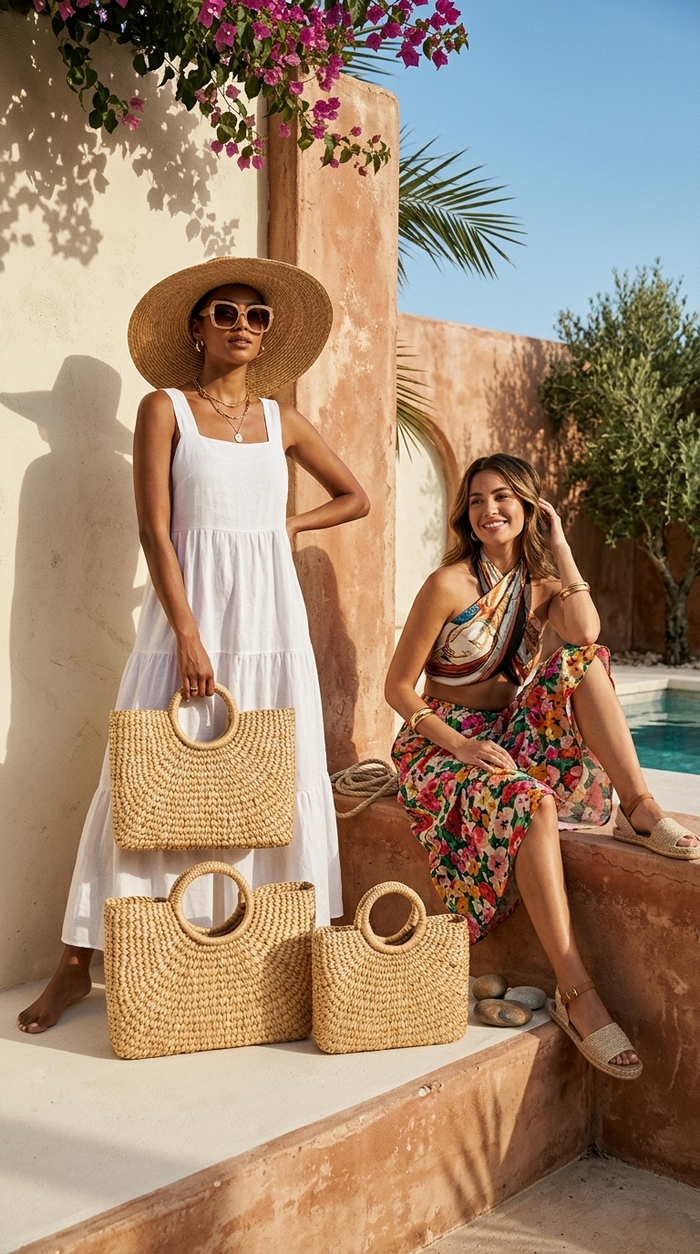
A big straw tote is made for a maxi dress, a kaftan, or a swim cover-up and flat sandals. Load it up for the day, and when you head to dinner by the water, swap down to a smaller straw bag so you are not hauling a beach tote to the table. If you want more outfit ideas, from linen to denim to evening, our full guide on how to style a straw bag has nine of them.
Ours are handwoven in Thailand from natural fiber, so no two are exactly alike. If you are curious how they come together, from the water the fiber grows in to the finished weave, we tell that story in handmade in Thailand. And if you are weighing straw against rattan or seagrass, we compare all three in straw vs rattan vs seagrass.
When you are ready to pick one, browse our straw beach bags, or the wider straw bags collection for shapes beyond the tote. Choose the lined one with the sturdy handles, and it will see you through a lot of summers.
Straw Beach Bag FAQ
What is the best straw bag for the beach?
A medium to large tote, roughly 14 to 18 inches wide, with a tight weave, a fabric lining, at least one zip pocket, reinforced handles, and a structured base so it stands upright on sand. Add a secure closure, like a hidden magnet or a zip, if you also carry it on travel days.
Are there straw beach bags with a zipper?
Yes. Plenty of straw and raffia beach bags now come with a zip or a hidden magnetic closure, which keeps your things secure on crowded promenades and travel days. If you carry valuables, choose a lined bag with a real closure rather than an open basket that anyone can reach into.
How big should a straw beach bag be?
Medium bags of 12 to 16 inches suit one or two people for a beach day and are what most people want. Large 16 to 20 inch totes work for family days, and oversized 20 inch and up bags handle multi-day trips. Match the width to a folded towel plus your essentials.
Can a straw beach bag get wet or go in salt water?
Keep it out of the sea. Straw and raffia weaken, stiffen, and can lose their shape when soaked in salt water, and they cannot be machine washed. If it gets splashed, blot it and air-dry it fully in the shade. Shake the sand out after each trip so it does not grind into the weave.
Is straw or raffia better for a beach bag?
Raffia is softer, more flexible, and resists fraying better, so it tends to last longer with daily use, while natural straw gives a crisper, more rustic look. Both shed sand well. Whichever you choose, look for a tight weave and leather-reinforced handles, since construction matters more than the fiber.