

How to Hang Baskets on a Wall, With or Without Nails
How to hang woven baskets on a wall with nails, hooks, adhesive strips or putty: what to gather, how to plan the layout, how to add a hanging loop and what suits ...

You can hang a light woven basket on a simple nail or a screw-in hook. If the basket has a tight weave and nothing to hook over, use a needle strung with clear fishing line or strong thread to make a loop on the back. If you would rather not make holes, adhesive hooks or strips, or mounting putty, can hold a light, flat-backed basket on a smooth wall.
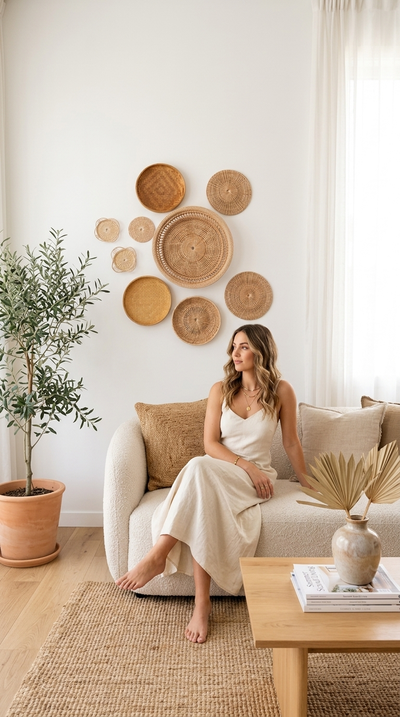

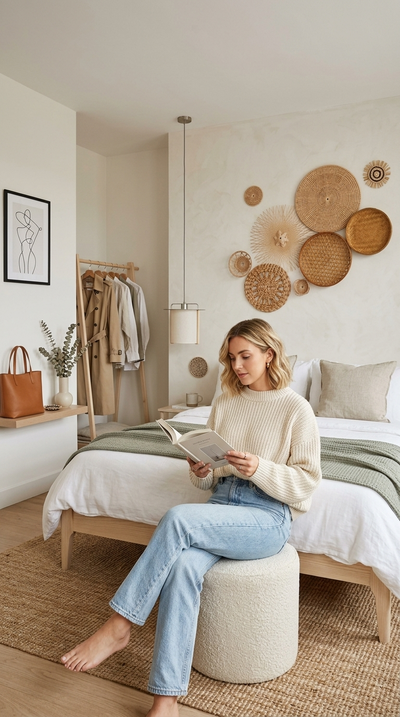
This guide covers choosing and grouping rattan wall baskets, planning the layout before you make a single hole, picking a fixing that suits your wall, and adding a loop to a basket that has none.
Why hang baskets on a wall?
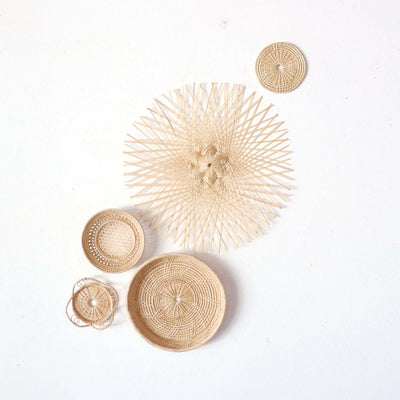
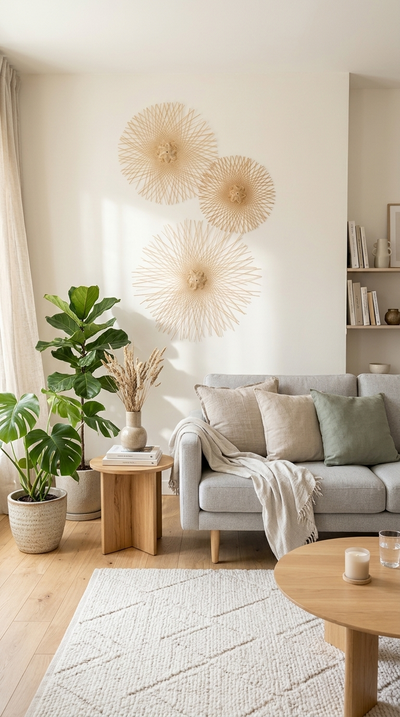
A basket wall makes a space look put together through texture, shape and pattern rather than frames. The weave and form of each basket add visual depth, so a group of them is a good alternative to the standard gallery wall.
It works in almost any room: living room, bedroom, dining room, hallway or a child's room. It lifts a bold wall colour just as well as a neutral one.
Buying tips for your basket wall
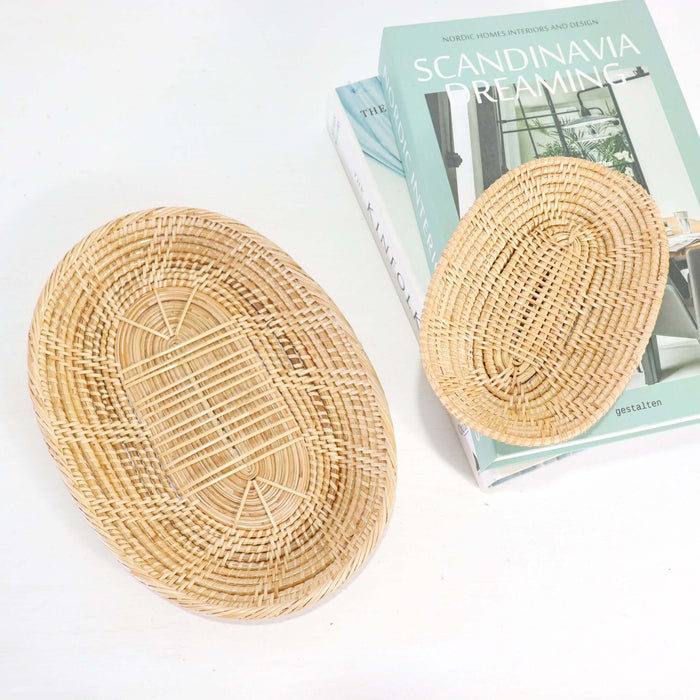
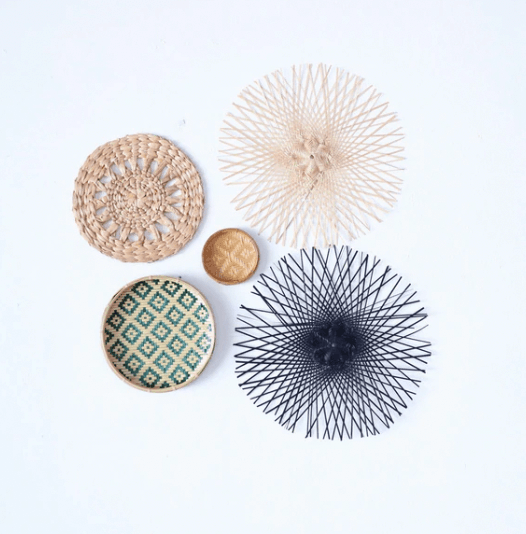
Variety: Look for baskets that vary in size, shape and colour. Mixing textures such as rattan, seagrass and rope gives a plain wall more to look at. You can buy wall baskets in sets, or collect a mix from different places for a more boho look.
Baskets and placemats: Mix a few woven placemats in with your baskets. They sit flat and add another layer.
Get a few extra: Buy one or two more baskets or bamboo wall pieces than you think you need, so you can edit the layout and swap out a piece that does not work.
If you would like a ready-made grouping, the WARRADA rattan wall decor set is five handwoven rattan baskets in four sizes, and the TEE WIT rattan wall decor set is nine in mixed sizes. Or start with a single KA MON CHAN hanging basket, a handwoven flat wall basket, and build around it. Like everything we sell, they are handmade in Thailand.

How to hang baskets on a wall, step by step
Step 1: Gather your supplies
Pick the fixings for your method; if you have not chosen one, read Step 3 first.
- Your baskets
- A pencil and a tape measure
- A spirit level, if you want straight lines
- Paper and painter's tape, for templates
- Small nails or picture hooks and a hammer
- Or adhesive hooks or strips, or mounting putty, if you want no holes
- Clear fishing line or strong thread and a needle, for baskets with no loop
- Screws and wall plugs, for heavier baskets or masonry walls
Step 2: Plan your layout
There is no single right way to arrange a basket wall, so plan before you pick up a hammer. Lay the baskets on the floor in your preferred layout, try a few versions and photograph each one. The photo you choose becomes your map when it is time to hang.
A few tips:
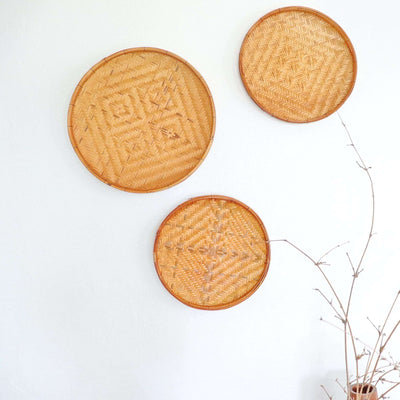
- Start with a focal piece, such as your largest or most striking basket, and arrange the rest around it.
- Odd numbers such as three, five or seven are a handy styling habit if you are unsure where to start, not a rule.
- Arrange the baskets by shape or size.
- Overlap a few baskets for a layered look.
Paper templates: Draw round each basket on paper, cut the shapes out and tape them to the wall with painter's tape. Move them until the group looks right, then mark on each one where its nail or hook should go.
Spacing and height: Keep the gaps small and fairly even, about a hand's width or less, so the baskets read as one group. Centre the group at roughly eye level, or lower when it hangs over a sofa or console, so it reads as one arrangement with the furniture.
For layouts built around round baskets, browse our round basket wall decor ideas.

Step 3: Choose a hanging method
The right method depends on your wall, how heavy and deep your baskets are, and whether you can make holes.
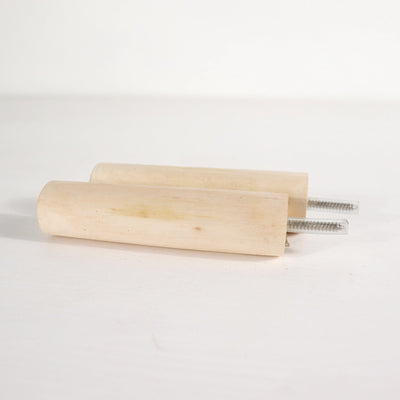
1. Nails or hooks: To hang baskets with nails, a small nail, pushpin or picture hook is usually enough for a light wall basket. Hang the basket by a loop or an open part of the weave on the back rather than nailing through the front. A nail driven through the basket can damage the weave, the head stays visible, and a nailed basket is tricky to reposition.
2. Adhesive hooks or strips: This is the route without nails, useful if you rent or would rather not make holes. Adhesive hooks or strips can hold a light basket on a smooth, clean, dry painted wall. Follow the pack instructions and check the weight rating. They tend to be less reliable on textured walls or in steamy rooms, and they do not suit deep baskets or baskets you plan to fill.
3. Mounting putty: Putty can hold a light, flat-backed basket that has no loop. It can leave marks on some paint or wallpaper, so test a small piece on a hidden spot first.
How to add a hanging loop: If a flat or tight-weave basket has nothing to hang it by, thread a needle with clear fishing line or strong thread and pass it through the weave on the back, near the top. Ideally, catch the weave at two points a little apart, so the weight is spread. Knot it into a loop, trim the ends, and check the basket sits flat with the loop hidden. On our wall baskets, look at the back for an open part of the weave that sits over a nail or hook, and add a loop if there is none.
Check your wall type: Plasterboard generally takes small nails or picture hooks for light baskets. Solid plaster, brick or other masonry usually needs a drilled hole, a wall plug and a screw. On smooth tile, an adhesive or suction hook rated for tile saves drilling. For heavier or deeper baskets, a screw and wall plug is the sturdier choice.
Step 4: Hang your baskets
Start with your focal piece or the centre basket and work outwards, following your photo or templates. With templates, put each nail or hook in at its mark, then tear the paper away. Every few baskets, step back and check the gaps. Finally, make sure each basket sits flat and hangs straight.

Frequently asked questions
1. Can you hang baskets with Command Strips?
Yes, for light baskets. Adhesive strips and hooks can hold a light woven basket without nails on a clean, smooth, dry wall. Check the weight rating on the pack, choose strips rated for more than your basket weighs, and follow the instructions. They tend to be less reliable on textured walls or in steamy rooms. For deep or filled baskets, use a screw and wall plug instead.
2. How do you decorate a wall with baskets?
There is no single right way. Lay the baskets on the floor, try a few arrangements and photograph them, then test your favourite with paper templates on the wall before making any holes, as in Step 2 above. For styling baskets around the rest of the room, see our guide on how to decorate with baskets.
3. How do you hang square baskets?
Arrange square baskets in a neat grid with small, even gaps, or group them by size, colour or texture. Mix them with round baskets for a looser design, or overlap the corners for a stacked look. Hang them like any flat basket, with a loop through the weave on the back, then check the top edge with a spirit level.
4. How do you hang baskets on a wall for storage?
Pick baskets with a firm base and sturdy sides, then fix each one with a screw and wall plug or a strong hook instead of a nail or adhesive strip, because the weight goes up once the basket is filled. Keep the contents light, such as rolled towels, post, keys or scarves, and hang the baskets at a height everyone can reach.
Final thoughts
A basket wall adds colour, texture and shape to a plain wall without the formality of frames. Plan the layout on the floor and on paper first, then choose a fixing that suits your wall and your baskets. The woven texture also sits well with bamboo lampshades, bohemian floor lamps and wall sconces.