

Boho Paint Colors: A Guide to Bohemian Wall Colours
A guide to boho paint colours for walls: seven colour families, the rule of 3, how to choose and test a colour in your own light, and how to pair natural decor wi...

Painting a room is more than a quick refresh with the first tin of paint you happen to pick up in the shop. The colours you choose reflect your personality and taste, and paint is a relatively cheap way to make a big impression. So instead of sticking to what feels safe, why not go bold and go boho?
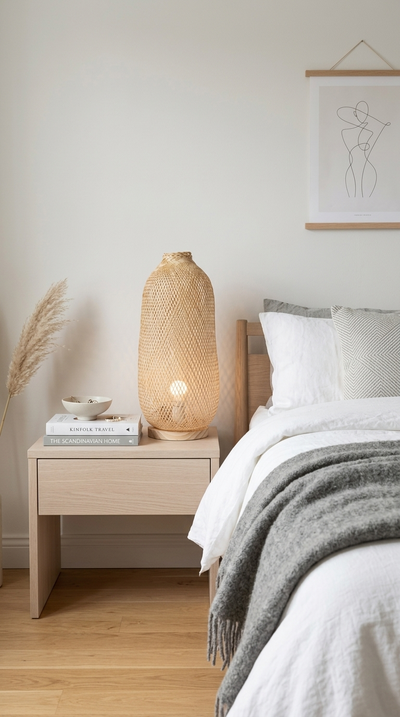
Boho, short for bohemian, is a free-spirited, eclectic look that borrows from different cultures, styles and eras, mixing natural materials with colour, pattern and texture. Start with two or three base colours from the earthy, warm or jewel families, then layer natural textures such as bamboo, rattan, cotton and palm leaf against them. Light changes how any colour looks, so test your shortlist on your own walls before you commit.
What are boho paint colours?
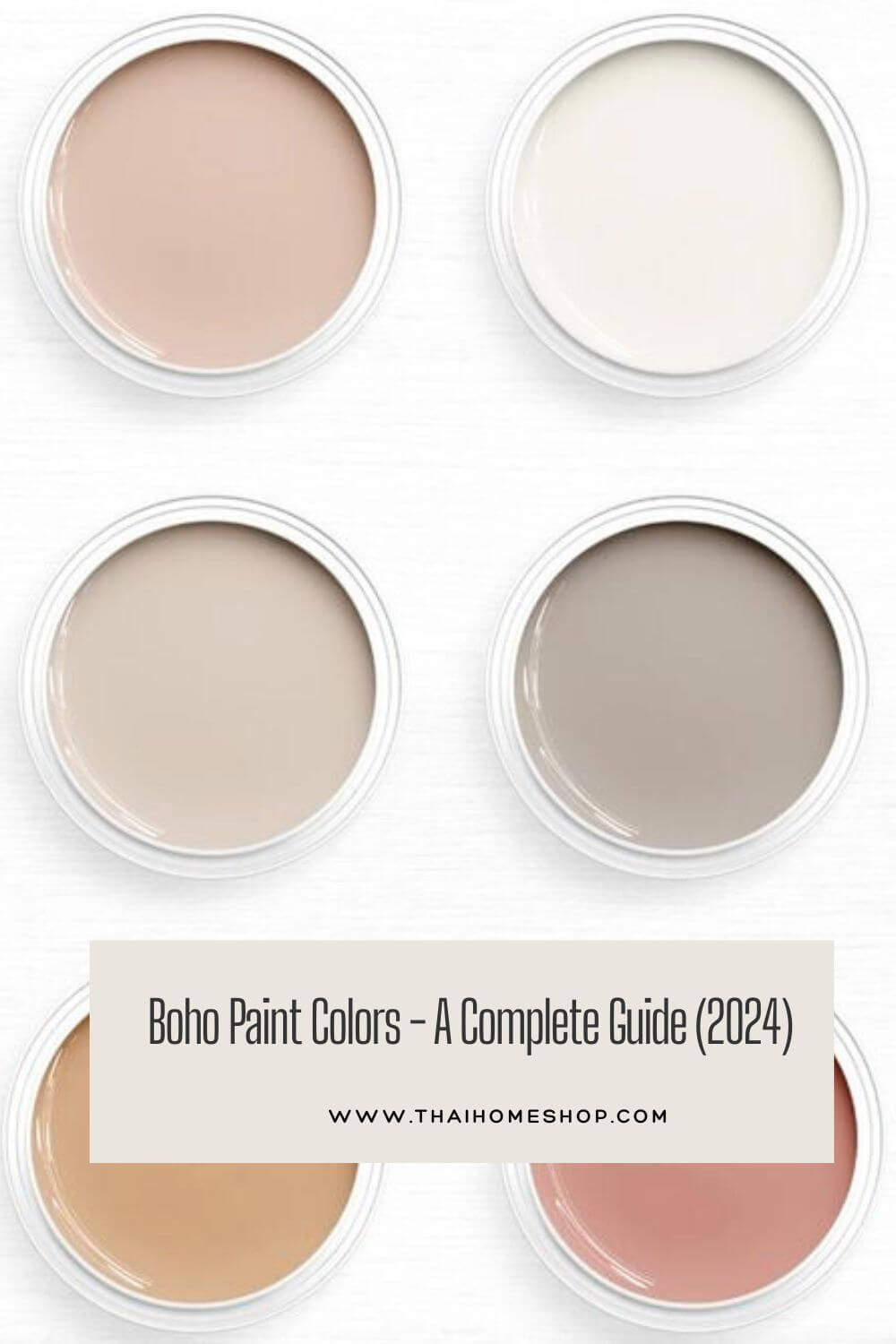
Boho paint colours are earthy, warm and jewel tones, plus warm neutrals. Think rusty reds, ochres, olive and forest greens, deep blues and teals, terracotta, soft pinks, and sandy or creamy neutrals. The look leans warm, with cooler jewel tones brought in for depth.
There are no hard and fast rules, but boho means eclectic, not chaotic. The walls set the base, and the decor brings in the brighter accents, pattern and texture.
For whole-room schemes with exact hex codes, see our boho colour palette guide.
The rule of 3
Choose two or three base colours: usually the walls, plus one or two colours that repeat in large pieces such as the sofa, rug or flooring. Then pick accessories that reflect and complement them. Earthy tones with neutrals, such as terracotta, sand and cream, or warm hues with a cooler shade, such as rust with teal, give an eye-catching scheme that still hangs together.
If you choose neutrals as your base, go big on texture. A cream wall with smooth furniture against it can look flat; woven bamboo, rattan, jute and cotton give it depth.
Boho wall colour families
Rusty red and burnt orange
Rusty red and burnt orange give a wall depth and a warm glow. They suit a living room, or a single wall behind a sofa or bed. They marry well with natural wood and with beige and ivory, and golden rattan looks rich against them. A floor lamp like A SA RA, with its honey-toned bamboo shade on a solid rubberwood base, picks up both the wood and the warmth of the wall.
Mustard yellow and ochre
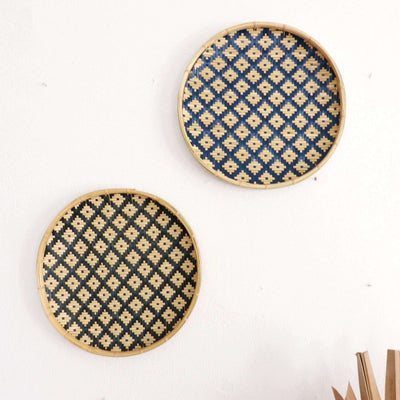
Mustard and ochre are bold enough to make a wall the focal point of a room. On every wall they can overwhelm a small space, so a chimney breast, an alcove or one living room wall is an easy place to start. Pair them with brown and green, or balance them with cool blues and greys. Natural woven pieces such as wicker wall decor give a tonal look against ochre, where the weave carries the interest. For more contrast, add cream textiles or green plants.

Olive green and forest green
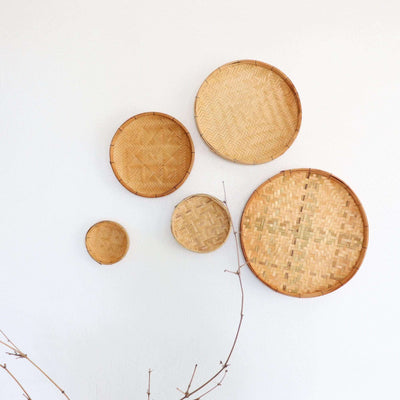
Earthy greens sit naturally alongside houseplants. Olive is the lighter, warmer option; forest green is deeper and suits a feature wall. Both pair with cream, white and pale pink. Dried palm leaf wall hangings look at home against olive. So do woven bamboo rounds such as the NARA set, five plates from 10 to 30 cm in natural tones.
Deep blue and teal
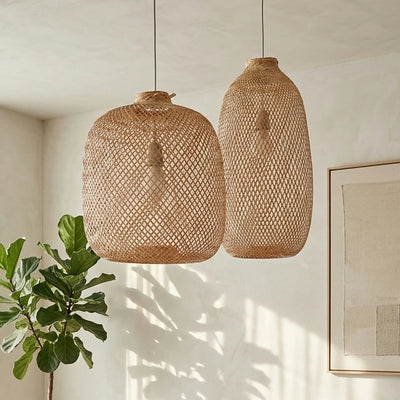
Deep blue and teal add drama to a room. They bring out brown and green, and beige and grey balance them. Both look darkest in a dim or north-facing room, so try them where there is good daylight, or on one wall first. A honey-toned shade from our bamboo pendant lighting, hung in front of a teal or deep blue wall, makes a strong contrast.

Terracotta and clay
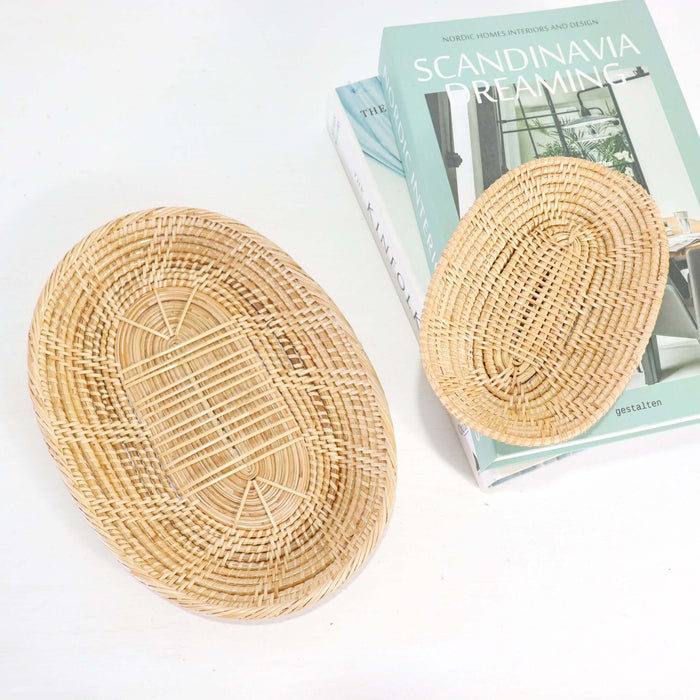
Terracotta and clay are warm, natural colours that work as an accent or as the main colour in a room. Natural-tone woven wall baskets sit well on a terracotta or clay wall, where the paler weave stands out against the deeper colour. For a softer clay, the LADAWAN set of five mixes honey and paler handwoven bamboo pieces, a combination that shows up well on soft clay, sand or white walls.
Soft pink
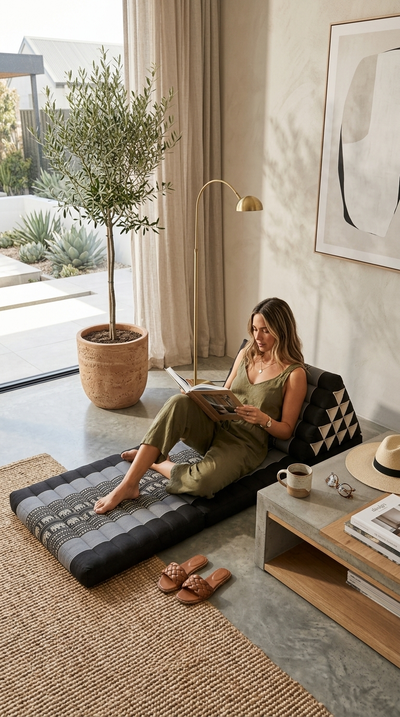
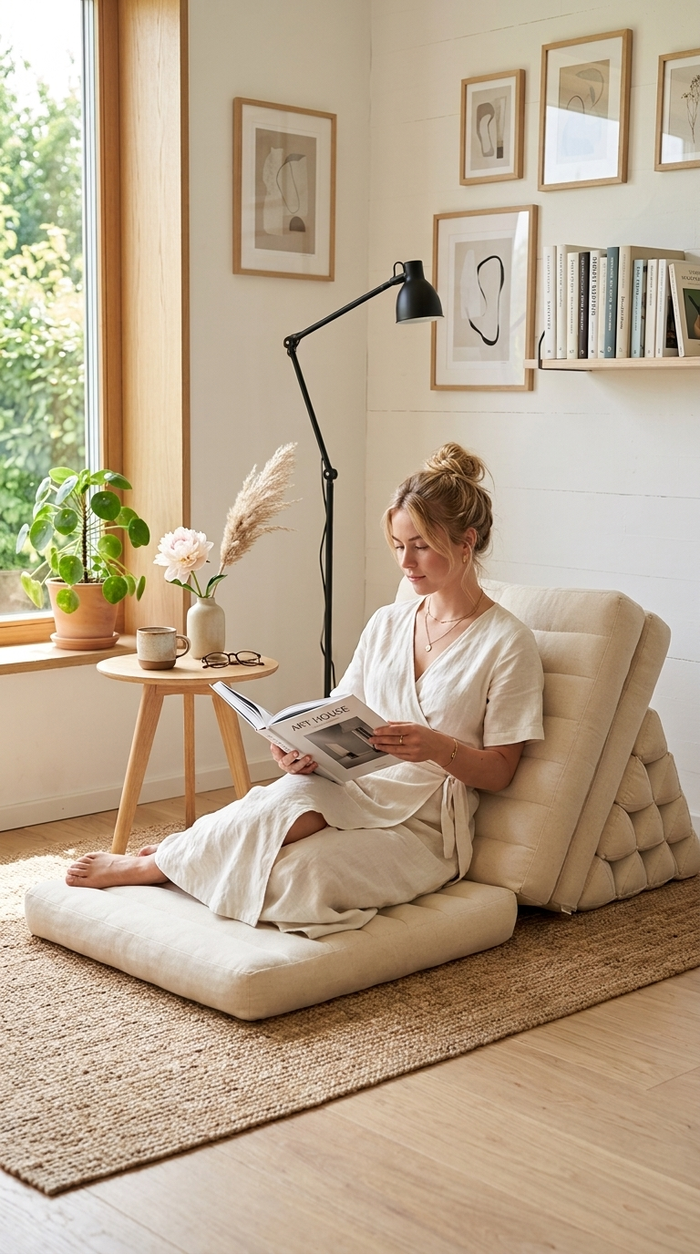
A soft, warm pink is a lighter way into boho colour. It works across a whole room, including a bedroom or small room where a deep shade would feel heavy. Pair it with other pastels, or balance it with beige and white; dustier pinks sit closer to clay. A floor cushion such as the PRA PA WEE 3-fold Thai triangle cushion, with an ivory white cotton cover and natural kapok filling, adds a low place to sit without breaking up the pale palette.
Neutral and earthy
Cream, sand, warm beige and soft stone make a classic backdrop for a boho space. With a neutral wall, texture and accessories do more of the work. Then go wild with colour in throws and rugs, and add texture with woven lampshades and Thai triangle cushions.
Boho bedroom paint colours
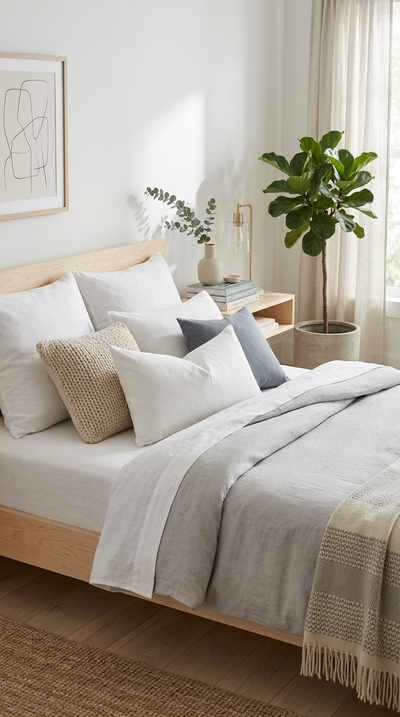
Bedrooms suit the softer, warmer end of the boho range. Clay, terracotta and dusty pink make a bedroom feel warm and enclosed, while sage, olive and soft stone keep it lighter and fresher. Deeper shades such as rust, forest green or teal work well on the wall behind the bed, with the other walls kept neutral so the room does not feel heavy.
Because a bedroom is seen mostly under lamplight, judge your samples in the evening as well as by day (see the testing steps below). Then pick one or two accent colours from the wall scheme for throws and cushions, and add woven texture with a rattan or bamboo pendant. For complete bedroom schemes with hex codes, see the soft pastel and moody palettes in our boho colour palette guide.
How to choose and test a boho paint colour
A colour that looks right on a sample card can look quite different on four walls.
- Check the light. In a north-facing room the daylight is cooler, so warm families such as terracotta, rust and mustard tend to read better there than cool blues, which can look colder still. A south-facing room gets warmer light and suits a wider range, including deep blue and teal. Think about when you use the room, too: a dining room used mostly at night is seen under lamplight.
- Decide between a feature wall and the whole room. Strong colours such as rust, mustard or deep teal are easier to judge on one wall first, and you can extend them later. Lighter clays, soft pinks and warm neutrals are simpler to use across a whole room.
- Paint sample patches on two walls. Pick one wall that gets direct light and one that does not, and make each patch large enough to judge from across the room. Check them morning, afternoon and evening, with lamps on after dark.
- Test against what is staying. Your sofa, flooring, rug and wooden furniture will all sit against this colour, so view the patches beside them and hold cushions or fabric samples up to the paint.

Pairing decor with boho walls
The honey, golden and ivory tones of bamboo, rattan and cotton work two ways against a painted wall: as contrast against deeper colours such as teal, olive and terracotta, and as quieter, tonal texture against mustard, ochre and pale neutrals. Our pieces are handmade in Thailand.
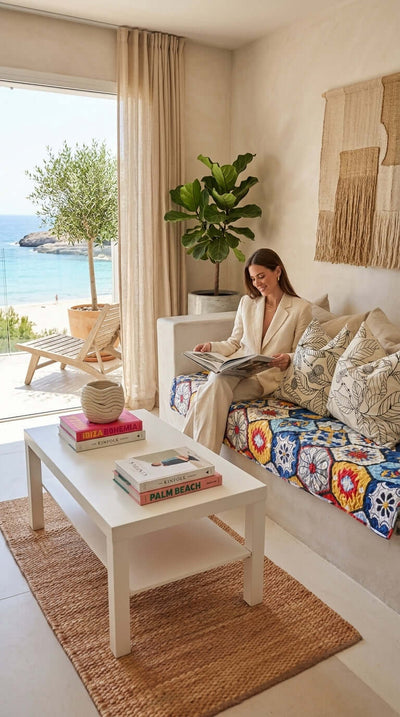
- Layer textures. Add a woven rug and a macrame or bamboo wall hanging, then throw pillows in a mix of weaves. Fringes and tassels add movement.
- Mix patterns within one scheme. Prints like ikat, paisley and floral can share a sofa, as long as their colours come from your base colours.
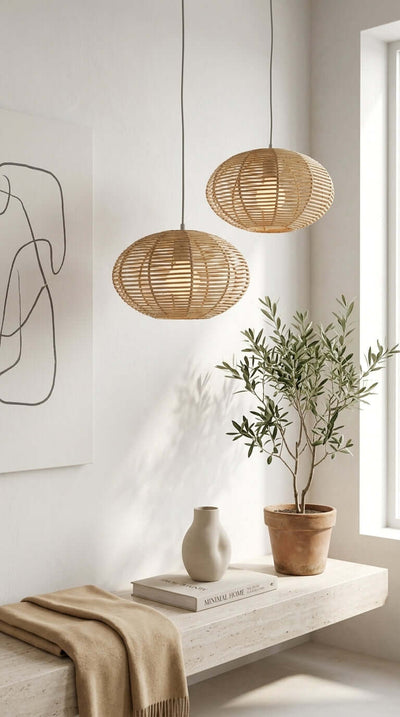
- Add a natural statement piece. A rattan pendant light, a rattan chair or a wooden bench gives the room an anchor. Plants like succulents and cacti add greenery that ties in easily with olive and terracotta walls.
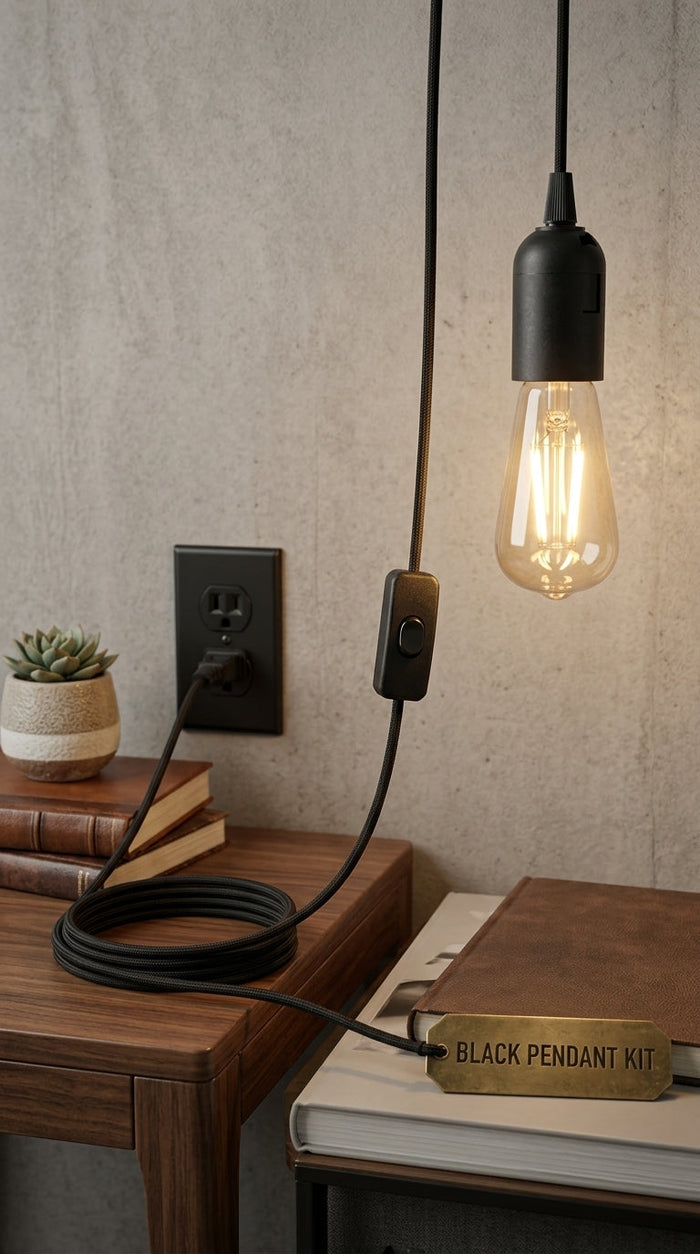
- Plan for evening light. Paint looks different after dark, so choose lamps alongside the wall colour. A low bamboo floor lamp beside the sofa adds woven texture and a soft glow. For side tables, browse our boho table lamps. Overhead, the TEERAYA shade is an open diamond lattice of slender, honey-toned bamboo strips that you can reshape. It comes with hanging hardware; the cord set and bulb are not included.
Boho paint colour FAQs
Can neutrals be boho?
Yes. Cream, sand and warm beige walls make a classic boho backdrop. Layer woven bamboo, rattan, jute and cotton so the room does not look flat, and bring stronger colour in through cushions, throws and rugs.
What colour walls go with rattan and bamboo decor?
Honey and golden woven pieces stand out most on darker walls such as deep blue, teal, olive and terracotta. Against white, sand and soft clay they look softer and more tonal. On mustard and ochre walls they blend in more, so add contrast with cream textiles or plants.
Should I paint a feature wall or the whole room?
A feature wall is the safer first step for strong colours such as rust, mustard or deep teal, because you can judge it in your own light first. Lighter clays, soft pinks and warm neutrals suit a whole room. Paint sample patches either way, and check them morning and evening.
Boho is about creativity and making a space your own, so keep experimenting until the walls feel like yours. For the bigger picture beyond paint, our guide to boho interior design ties the whole look together.