

What Is Kapok? The Natural Filling Inside Thai Floor Cushions
Kapok is the soft fibre from the seed pods of the kapok tree, used as loose filling rather than thread. Here is how a kapok cushion feels, how it compares with co...

Kapok is the fine, fluffy fibre that grows inside the seed pods of the kapok tree, Ceiba pentandra. Like cotton, it is a seed fibre, but it is hard to spin into thread on its own, so it is used as loose filling for pillows, mattresses and cushions, including the Thai floor cushions we sell.
Seen "kapok filling" on a cushion and wondered what you would actually be sitting on? Below: where the fibre comes from, how a kapok cushion feels, how it stacks up against cotton and synthetic fillings, which of our cushions use it, and how to look after one.
Where kapok comes from
The kapok tree is a tall tree of the tropical rainforest, one of the emergent trees that rise above the forest canopy, as described in the University of Kansas profile of the kapok tree. Its fruit is a pod, and inside the pod the seeds sit in a white, fluffy covering. That covering is kapok.
As a fibre, kapok is classed with cotton. Both count as plant hairs, or seed fibres, that develop on the inside of a plant's fruit. You may also see kapok sold as ceiba or Java cotton, two other names for the same fibre.
What separates kapok from cotton is what you can do with it. Cotton can be spun into thread and woven into cloth. Kapok is difficult to spin unless it is blended with other fibres, so rather than becoming fabric it goes inside things as loose fill, in pillows, mattresses, bedding and upholstery.
What kapok filling feels like
Loose, kapok looks and feels a lot like raw cotton: white, soft and light.
Packed tightly into a cotton case, it is a different thing altogether. The same fibre goes into soft bed pillows and firm floor cushions, and what changes is how much goes in and how tightly it is packed. Where our triangle cushion listings describe the feel, they call it firm. The KORN KA NOK 2 fold listing promises "firm yet supportive comfort", the MO RA KOT 3 fold "firm yet comfortable support", and the dark red 1 fold calls kapok "lightweight and resilient", with a firm filling that supports your back and helps the cushion keep its shape.
So take "firm" at face value. A kapok triangle cushion is not a sink-in sofa seat, and that firmness is what keeps the triangle upright behind you when you lean back.

Not every kapok piece is described the same way. The zafu listings talk about a balance of firmness with some give, the KAN TA PHON meditation set offers "firm, supportive seating", the BEN YA PA zabuton is described as "plush yet supportive", and the GAVIN bolster listing puts softness alongside support. Read the listing for the piece you want rather than assuming all kapok feels alike.

The 1 fold and 2 fold listings also call their cushions lightweight, easy to move around or to carry and store, which fits a filling that starts out as fluff.
Kapok compared with cotton, polyester and foam
Cotton. Both are seed fibres, but cotton becomes thread and kapok becomes filling. On most of the cushions listed below, the two plants meet: the covers are cotton and the stuffing is kapok.
Polyester and foam. Polyester fibrefill and polyurethane foam are synthetic, made in a factory rather than grown on a tree. Several of our listings call kapok "a natural alternative to synthetic fillings". That phrase is about where the filling comes from. It is not a claim that kapok does any particular job better than foam or polyester.
In the end it comes down to what you want under you. A kapok triangle cushion gives you a firm seat filled with a plant fibre. The listings do not promise more than that, and neither do we.
If you like knowing what things are made of, our guide to what bamboo is does the same job for another plant material.
Where you'll find kapok in our range
Every cushion in the table below names kapok as its filling on its product page, and each one is handmade in Thailand. The filling and cover wording comes from the listings, and sizes are given as each listing states them.
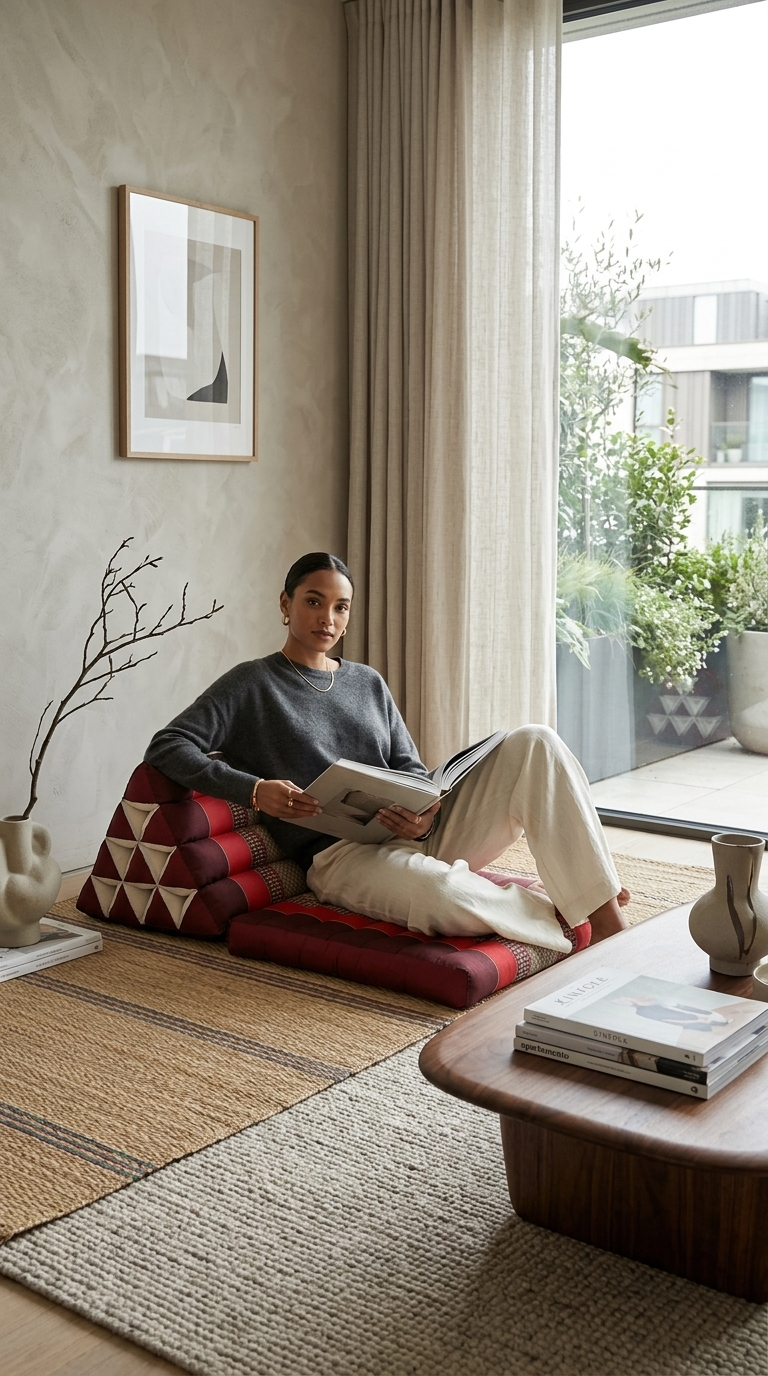
Our Thai triangle cushions collection holds both the triangles and the meditation cushions. A triangle cushion pairs a triangular backrest with a folding mattress: a 1 fold has a single section, the 2 fold and 3 fold add more, and a 3 fold opens out into a full floor mattress. Zafus are the round cushions you sit on to meditate (our guide to what a zafu is explains the shape and how to use one), and zabutons are the flat mats that go underneath. Kapok bolsters, along with the WA RA NA backrest, also sit in the bolster pillows collection.

| Cushion | Type | Filling (listing wording) | Cover | Size |
|---|---|---|---|---|
| Dark red 1 fold | Triangle cushion, 1 fold | 100% natural kapok | Dark red cotton | 70 x 50 x 32 cm |
| KORN KA NOK | Triangle cushion, 2 fold | 100% natural kapok | Woven cotton | 127 x 50 x 32 cm |
| PRA PA WEE | Triangle cushion, 3 fold | 100% natural kapok | Ivory white cotton | 170 x 50 x 32 cm; mattress 225 x 50 cm |
| CHON NA KAN | Triangle cushion, 3 fold | Natural kapok | Dark blue cotton | 225 x 50 x 33 cm fully extended |
| MO RA KOT | Triangle cushion, 3 fold | 100% natural kapok | Cotton | 225 x 50 x 33 cm fully extended |
| WA RA NA | Triangle backrest | Natural kapok only | Cotton, double stitched | 54 x 38 x 36 cm |
| PONG PA NA | Zafu | Natural kapok | Not stated | 35 cm wide, 20 cm high |
| KUN CHORN | Zafu | Natural kapok | Not stated | 35 cm wide, 20 cm high |
| BEN YA PA | Zabuton | Natural kapok | Not stated | 48 x 48 x 6 cm |
| KAN TA PHON set | Zafu and zabuton | 100% natural kapok | Cotton | Zabuton 70 x 70 x 6 cm; zafu 36 cm across, 20 cm high |
| Green and brown bolster | Meditation bolster | 100% kapok | Cotton | 35 x 18 x 12 cm |
| GAVIN | Yoga bolster | Kapok | Black, fabric not stated | 66 x 25 cm |
Two gaps to know about. The PONG PA NA, KUN CHORN, BEN YA PA and GAVIN listings do not name the cover fabric, so check the product page if that matters to you. And the 3 fold sizes are not measured the same way on every listing, so compare the mattress size, 225 x 50 cm on all three, rather than the headline figure.
Caring for a kapok cushion

The care advice in our guide to using a Thai triangle 3 fold cushion comes down to three habits:
- Wipe away dirt or marks with a damp cloth, and avoid soaking the fabric.
- Sit the cushion in a sunny spot now and then to keep it fresh.
- When you are not using it, fold it neatly and keep it in a dry, ventilated place.
That guide was written for the 3 fold, but the other cushions here share its kapok filling and most share its cotton cover, so it works as a starting point for any of them.
Reference sources describe raw kapok fibre as water-repellent. That is a property of the loose fibre, not a promise about a finished cushion in a cotton cover, so the advice above still stands: keep a kapok cushion away from soaking.
One thing the listings do not say is that the covers come off. None of the product pages above mentions a removable or machine washable cover, so do not plan on unzipping one and putting it in the wash. If cleaning matters to your choice, check the product page or ask us before you buy.
Kapok questions
Is kapok the same as cotton?
No, though they are related. Both are seed fibres that grow inside a plant's fruit, but they come from different plants. Cotton can be spun into thread, while kapok is hard to spin on its own and is used as filling instead. Most of the kapok cushions in our table use both: cotton for the cover, kapok inside.
What is kapok filling used for?
Reference sources list pillows, quilts and other bedding, mattresses, upholstery and soft toys. In our range it fills Thai triangle cushions, zafus, zabutons and bolsters.
Is a kapok cushion firm or soft?
It depends on the cushion. Loose kapok is soft and fluffy, but where our triangle cushion listings describe the feel, they call it firm. The zafus are described as firm with some give, and the BEN YA PA zabuton as plush yet supportive.
How do you clean a kapok cushion?
Wipe marks with a damp cloth and avoid soaking it, then let it air in the sun from time to time. Our listings do not say the covers are removable, so do not assume one comes off for washing.