


How to Use a Bamboo Steamer (Including Sticky Rice)
How to set up a bamboo steamer on an ordinary pan, steam food without scorching or sticking, and steam Thai sticky rice in a woven basket.

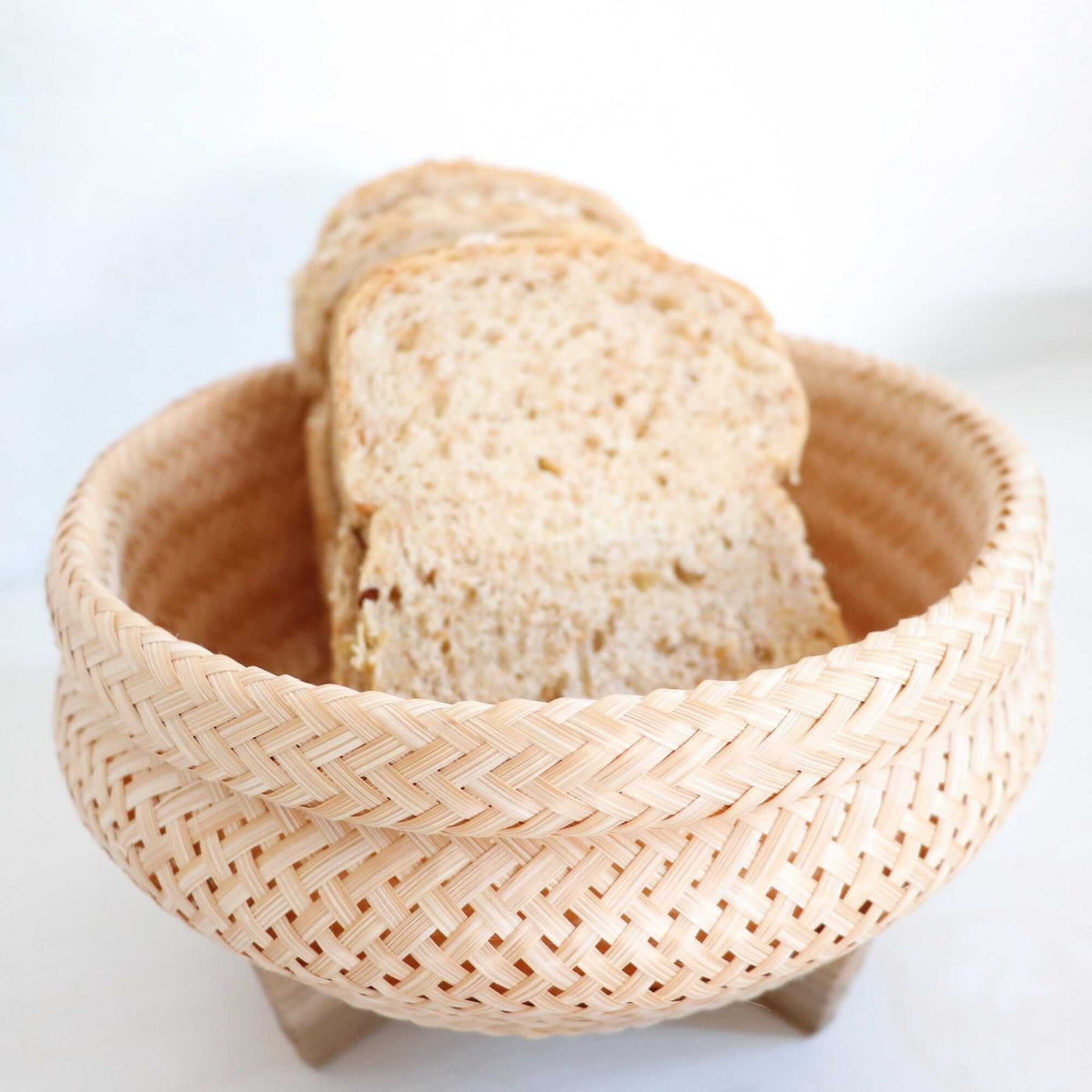
A bamboo steamer sits over a pan of gently simmering water, never in it, with the food on a lined tray and the lid on top, so the steam rising through the slatted base does the cooking. You don't need a wok. An ordinary saucepan works, as long as the steamer can rest on its rim with the water well below the bamboo. Thai sticky rice in a woven basket has its own section below.
What you need before you start
- A bamboo steamer (one tier or a stack of tiers) and its lid.
- A pan or wok the steamer can sit on or in, with room for water below its base.
- A liner: baking paper (parchment) with a few holes poked through it, cabbage or lettuce leaves, or ready-made steamer liners.
- Oven gloves, tongs and a kettle for hot top-ups.
Can you use a bamboo steamer on an ordinary pan?
Yes. In a wok, the steamer settles down inside the sloping sides, above the water. On a straight-sided saucepan it rests on the rim instead, so pick a pan slightly narrower than the steamer. Before any water goes in, sit the empty steamer on the pan, check it rests steadily, and note where its base sits. That is your limit for the water.
If the steamer overhangs the pan by a wide margin, wet the outside of the bamboo before you put it on. On a gas hob, flames can creep up around a small pan, and damp bamboo is less likely to scorch.
Before the first use
Advice differs. Some guides suggest soaking a new steamer in warm water to make the bamboo more pliable and less prone to scorching; others suggest washing it and steaming it empty briefly. A simple default is to rinse it in warm water, then run it empty over simmering water once.
How to steam food in a bamboo steamer, step by step
If you remember one thing from this list, make it the water. Too much and it reaches the bamboo and soaks the food; too little and the pan boils dry under the steamer. Once it's all in place, aim for three things at once: the water below the base, the lid sitting flat and snug, and a gentle wisp of steam escaping around it. If one is off, fix it before you start timing.
- Add water to the pan. Pour in enough to last the cooking time, staying clearly below the base line you found earlier. Check: with the steamer in place, no water touches the bamboo.
- Bring it to a simmer. Heat the water with the steamer off the pan. Aim for a steady simmer, not a hard rolling boil, which boils the water away faster and can splash up against the base. Check: small, steady bubbles and a constant rise of steam.
- Line the basket. While the water heats, cover the base of each tier you plan to use, poking holes in baking paper so steam can still come through. Paper suits marinated meat or fish, keeping the marinade's smell out of the bamboo. Check: you can still see holes or gaps for the steam.
- Load the food with space around it. Lay it out in a single layer with gaps between pieces. If a tier looks crowded, spread the food over another tier rather than piling it up. Check: you can see liner between every piece.
- Stack tiers if you need more than one. Put the food that takes longest at the bottom, nearest the heat. The top tier sits furthest from the water, so either swap the tiers round halfway through, wearing oven gloves, or give it a little longer. Check: each tier sits flat without rocking.
- Put the lid on and set the steamer over the water. Fit the lid snugly on the top tier, lower the steamer onto the pan or into the wok, then leave the lid alone; every peek lets the steam out. Check: a gentle wisp of steam escapes around the lid, not big puffs from one side.
- Watch the water while it cooks. Follow your recipe's timing for the food, and check the water level now and then. To top up, lift the steamer off with oven gloves, pour in hot water from the kettle and set it back. Cold water would stall the simmer. Check: the simmer comes back quickly and the water still sits below the base.
- Lift out carefully. The trapped steam is hot and comes out in a rush when the lid lifts. Turn off the heat, put on oven gloves and raise the far edge of the lid first, so the steam rolls away from you behind it. Let the first rush clear, then lift the food out with tongs. Check: the steam has cleared before your hands go in.
How to steam sticky rice in a Thai bamboo basket
A stacked steamer has flat tiers for food laid out in a layer, such as dumplings, vegetables or fish. A Thai sticky rice basket is a single woven basket used over a pot of simmering water, made to hold a mound of soaked glutinous (sticky) rice. The routine changes to suit it:
- Soak the rice first. Follow your recipe's soaking time, then drain it.
- Line the basket with damp muslin or a thin cotton cloth. The cloth keeps the grains out of the weave and makes turning the rice easier.
- Steam over a pot of simmering water. The water stays below the basket, as before. Cover the rice by folding the cloth over it, or with a lid if you have one that fits.
- Turn the rice once. Partway through, carefully lift the hot cloth by its corners and flip the rice so the top gets its turn nearest the steam.
- Steam until tender and chewy. As rough guidance, allow around 25 to 45 minutes, depending on the rice and how long it soaked. Check: grains from the middle are soft and chewy all the way through, with no hard centre.
If you need a basket for this, our Rose sticky rice steamer basket is handcrafted and measures 11 cm (4.5 in) high and 17 cm (7 in) wide. Compare that width with the pot you plan to steam over before you buy. There's also our short video on setting up a sticky rice steamer.

Why food sticks, the base scorches or tiers cook unevenly
- Food sticks to the bamboo. The base needs a liner: holed baking paper, leaves or a ready-made liner for everyday steaming, and a damp cloth for sticky rice.
- The base is scorched or blackened. The pan may have run dry, or flames may have reached bamboo overhanging the pan. Next time, top up before the level gets low, use a pan closer to the steamer's size and wet an overhanging rim first.
- The top tier is undercooked. Swap the tiers round halfway or give the top a little longer, spread out crowded food, and check the lid isn't letting steam leak away.
- The water ran dry. Turn off the heat and lift the steamer off with oven gloves. Pour in hot water slowly, keeping your face and hands back from the steam, then bring it back to a simmer. Next time, check the level more often or use a deeper pan.
- Condensation drips onto the food. Cover the lid with a clean, thin cloth to absorb the condensation. Tuck the corners up on top so no fabric hangs down towards the flame.
How to dry and store a bamboo steamer
Rinse the steamer after use, but don't leave it soaking; the more water bamboo absorbs, the longer it takes to dry. Let it air-dry completely, which can take a couple of days, because bamboo that feels dry on the surface can still hold moisture inside. Store it only once it's fully dry, since a steamer put away damp can develop mildew.
For smells, stuck rice and mould, see our guide on how to clean a bamboo steamer.
Bamboo steamer FAQ
Does a bamboo steamer go in the water?
No. It sits above simmering water, on the rim of a pan or inside a wok. If the water reaches the bamboo, there's too much in the pan.
Do you need to line a bamboo steamer?
It isn't strictly required, but it's worth doing, because food such as dumplings can stick to bare bamboo. Whatever you use, leave a way for the steam through.
Can you use a bamboo steamer without a wok?
Yes. A saucepan slightly narrower than the steamer works, with the steamer resting on the rim.
Do you soak a bamboo steamer before first use?
Some cooks do; others wash it and steam it empty. A warm rinse and one empty run over simmering water is a simple default.
For more pieces to cook and serve with, browse our Kitchen & Dining collection.


