

Placemats for a Wood Table: What Protects It and How to Clean Woven Mats
What placemats protect a wood table from, which materials suit it, and how to clean woven placemats without soaking them.

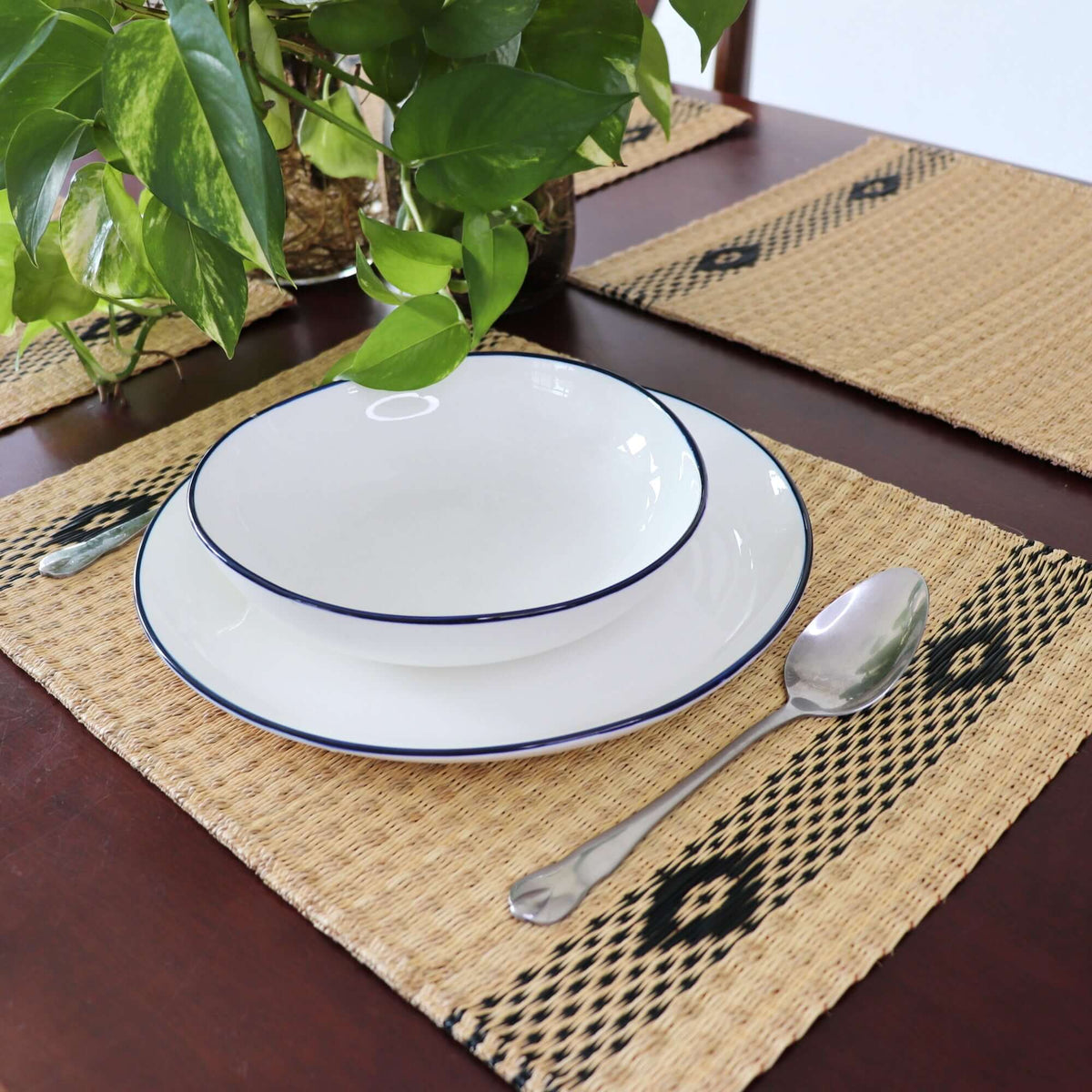
A good wooden table keeps a record of every dinner: a ring from a cold glass, a fine scratch where a plate was pushed aside, a mark where a drip sat too long. Placemats guard against exactly that everyday damage, and a thicker, tighter weave keeps more liquid off the wood. They are not a heat solution for hot pans, though, which still need a trivet or table pad. Woven natural mats are also generally spot clean only.
What placemats protect a wood table from (and what they don't)
Scratches. Plates, cutlery and serving dishes slid across a finished table can leave fine scratches. A placemat puts a layer between them and the finish.
Condensation rings. Water that gathers on a cold glass runs down and can leave a ring on the wood. A coaster, or a placemat under the glass, catches it first.
Small spills. Placemats handle drips and splashes, not a knocked-over glass of wine. Thin cloth and open, gappy weaves let liquid through; thicker, denser mats let less through. Whatever the weave, blot spills straight away.
Heat. Wipe-clean and cloth mats deal with spills but don't block heat, and a woven mat isn't something to rely on under a pan straight from the oven or hob. Very hot pans and dishes belong on a trivet, or on a table pad if you regularly serve hot food at the table.
Which placemat material suits a wood table
The main trade-off is protection against cleaning effort. Thick woven mats tend to protect a table more but take more cleaning. Cloth and plastic mats are easier to look after, but thin cloth and open plastic weaves can let spills through.
| Material | Protects against | Watch out for | Cleaning |
|---|---|---|---|
| Woven natural fibre, thick and tight | Scratches, drips, small spills | Not a liquid barrier, so blot spills at once; food can lodge in the grooves | Brush out crumbs, spot clean with a barely damp cloth, air dry; never soak |
| Woven natural fibre, thin or open | Scratches | Liquid can run through the gaps to the wood | As above |
| Vinyl and other wipe-clean mats | Spills on the surface, as vinyl doesn't absorb liquid | Woven styles can still let liquid through the gaps; no heat barrier | Wipe clean |
| Cloth (cotton, linen) | Scratches, light drips | Thin cloth lets spills seep through to the table; no heat barrier | Follow the care label |
| Cork | Scratches | Usually spot clean only, so spills need quick attention | Spot clean; don't submerge |
Or start from the table itself:
| Your table | What to use |
|---|---|
| Everyday table with frequent spills | Flat wipe-clean mats, or thick, tight woven mats if you blot spills as they happen |
| Good wood table where scratches and small spills are the worry | Thick, tightly woven natural fibre mats |
| Heirloom table, or hot dishes served at the table | A table pad, trivets for hot pans, and placemats on top for each setting |
Are woven placemats good for wood tables?
Yes, with two conditions: the weave is tight, and you blot spills rather than trusting the mat to hold them.
A woven mat does well against the scrape of cutlery and the slide of a plate, giving the finish a firm, textured cover with a little cushion if it's thick.
But woven natural fibre is not a liquid barrier. A spill left sitting can soak into the fibres, and an open weave lets it straight through to the table. Food also settles into the grooves of a chunky weave, so a thick mat takes more cleaning than a flat one. More protection, more effort.
Three checks before you buy:
- A tight weave. Hold the mat up to the light. If plenty of light shows between the strands, liquid can find the same gaps.
- A flat back. Turn it over. The underside is what touches the wood, so it should lie flat and even, without stiff ends or knots sticking out.
- Some thickness. A thicker mat gives more cushion and lets less through, but expect deeper grooves to brush out after meals.
Our woven placemats are handwoven from sedge, water hyacinth, bamboo, rattan, banana leaf sheath or other natural fibres, depending on the design. The same three checks apply to them as to any other mat.

Round woven placemats as chargers
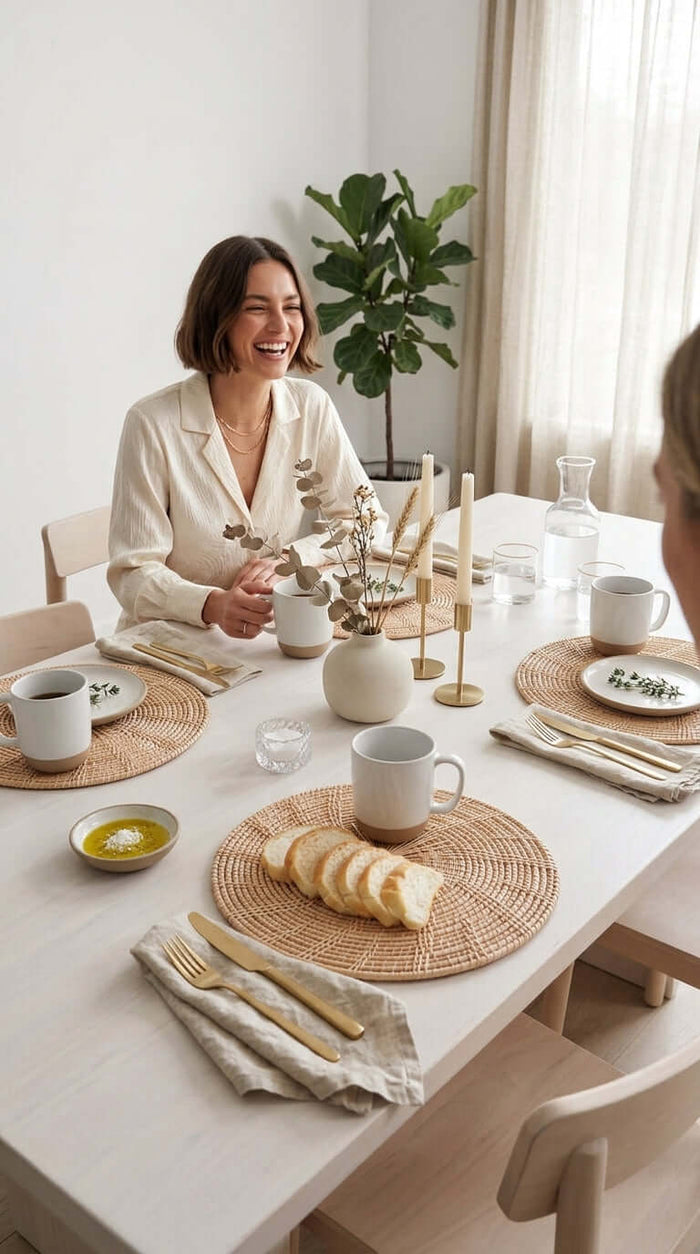
A charger is the larger base that sits under a dinner plate to frame the setting. Round woven placemats can do that job. Set one under the dinner plate and the weave shows as a ring around it, while the mat still covers the wood where the plate sits.
Our round mats are 25 to 30 cm across, so measure your dinner plates first. A charger only frames the setting if it is wider than the plate. Our round woven placemats are also sold as charger plates.

How to clean woven placemats
Woven natural fibre mats are usually spot clean only. The care notes on our listings point the same way: wipe with a damp cloth and let the mat air dry, and some also say to avoid prolonged moisture, soaking and machine washing. The routine:
- Blot spills straight away. Dab a dry cloth or paper towel onto the spill to lift it. Don't rub it into the weave.
- Shake or brush out crumbs. After the meal, shake the mat outside or over the sink, then run a soft, dry brush along the weave to clear the grooves.
- Spot clean with a barely damp cloth. Wring the cloth out well and wipe only the marked area. Keep the rest of the mat dry.
- Dry it fully, flat. Lay the mat flat to air dry, away from direct heat such as a radiator, and wait until it is dry right through before it goes back on the table.
- Store it dry. Keep mats flat in a dry, airy place between uses.
Never soak woven placemats or put them in the washing machine. If a mat has been left damp and you spot mould, our guide on how to clean wicker baskets covers deeper cleaning for woven natural fibre, mould included.

Looking after the table underneath
Lift the mats between meals rather than leaving them down for days, and wipe the table underneath with a soft cloth. That clears crumbs and grit that could scratch the finish, and lets the wood dry off if anything crept through the weave.
The centre of the table, where serving bowls, bread boards and candles sit, can take a table runner as another layer, though hot dishes still go on a trivet. If you're planning the look as much as the protection, here are seven ways to style your table with natural fibre placemats.
Frequently asked questions
Should you use placemats on a wood table?
Yes, if you want to avoid scratches, condensation rings and marks from small spills. It won't stop a knocked-over glass reaching the wood or replace a trivet for hot pans.
Do woven placemats protect from heat?
Most of our placemat listings say they help protect tabletops from heat, scratches and spills, but they give no temperature limit. Treat that as protection under plates and serving bowls. Pans and dishes straight from the oven or hob belong on a trivet or table pad.
Can you wash woven placemats?
Not by soaking or machine washing. Brush out crumbs, spot clean marks with a barely damp cloth, then let the mat air dry fully, flat and away from direct heat.
What size placemat for a dining table?
Choose one that holds a plate and cutlery with space left between settings. As a guide, our rectangular placemats are about 45 x 30 to 36 cm (roughly 18 x 12 to 14 inches), our bamboo placemats are 40 x 27 cm (about 16 x 11 inches), and our round mats are 25 to 30 cm across (about 10 to 12 inches).
Setting a lot of places at once? Hosts and restaurants buying in quantity can start with our bulk placemats.